
'%20fill='%23fff'/%3e%3c/clipPath%3e%3c/defs%3e%3cg%20id='logo_s'%20transform='translate(3331%2011131)'%20clip-path='url(%23clip-path)'%3e%3ccircle%20id='椭圆_3510'%20data-name='椭圆%203510'%20cx='15'%20cy='15'%20r='15'%20transform='translate(-3330%20-11130)'%20fill='%23ffffff'%20opacity='0'/%3e%3cpath%20id='联合_790'%20data-name='联合%20790'%20d='M17,22.938H3.615a3.694,3.694,0,0,1-2.759-.895A3.625,3.625,0,0,1,0,19.454V3.489C.031,1.194,1.2.087,3.689.005H13.43L13.492,0V3.98a3,3,0,0,0,3,3h4.193V19.454c-.025,1.589-.662,3.485-3.554,3.485ZM5.8,16.588a.88.88,0,0,0,.879.879H14.1a.879.879,0,0,0,0-1.759H6.681A.88.88,0,0,0,5.8,16.588Zm0-3.836a.88.88,0,0,0,.879.879H14.1a.88.88,0,0,0,0-1.759H6.681A.881.881,0,0,0,5.8,12.752Zm0-3.837a.88.88,0,0,0,.879.879h4.783a.879.879,0,1,0,0-1.759H6.681A.88.88,0,0,0,5.8,8.915ZM17.031,5.5a2,2,0,0,1-2-2V.365a1.9,1.9,0,0,1,.3.235c.564.547,2.329,2.146,3.5,3.2l.068.061.886.8a2.8,2.8,0,0,1,.636.834Z'%20transform='translate(-3325.342%20-11126.47)'%20fill='%23ffffff'/%3e%3c/g%3e%3c/svg%3e)


 What Is a Bank-Owned Car?
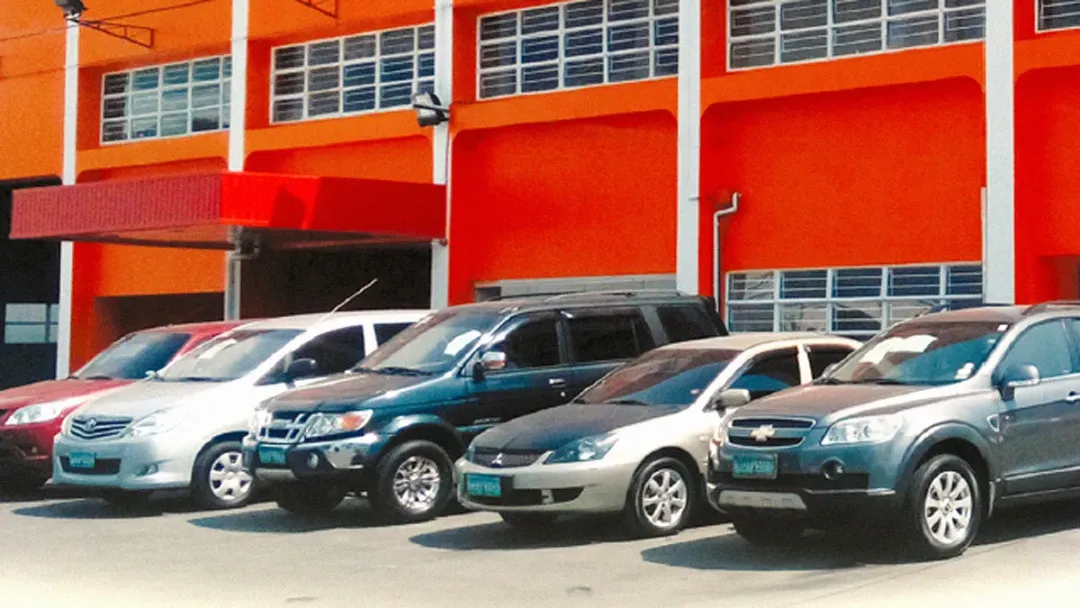 What Is a Bank-Owned Car?
A bank-owned car is a vehicle that has been repossessed by a financial institution after the borrower failed to make payments. The bank takes legal ownership, clears any prior liens, and sells the vehicle through auction, direct sale, or a dealership partner.
These cars are not the same as salvage vehicles. A salvage title usually means the car was declared a total loss by an insurer. A bank-owned car typically has a clean title—but it may have mechanical or cosmetic issues because the previous owner could not afford maintenance. Some repossession cases also involve damage that occurred during the repossession itself.
Key characteristics of bank-owned cars: Sold as-is, with no warranty Priced to recover the loan balance, not to maximize profit Often sold at auction, online or in person May have deferred maintenance or cosmetic damage Usually come with a clean title, but always verify
Why Bank-Owned Cars Can Be a Great Value
The main appeal is price. Banks want to liquidate repossessed assets quickly. They are not emotionally attached to the vehicle and are not trying to make a profit on the resale—they just want to reduce their loss. That often translates into prices below retail market value.
Potential advantages: Lower purchase price than dealership retail Clean title in most cases Opportunity to buy a newer vehicle for less Wide selection through online auctions Negotiation possible in some direct-sale scenarios
Potential drawbacks: Sold as-is, no warranty Condition unknown or undisclosed Limited opportunity for test drives Auction fees can add 10–15% or more Repairs may erase savings Paperwork and registration can be complex
The key is to treat every bank-owned car as a project, not a finished product. If you are willing to do the homework, the savings can be substantial.
Where to Find Bank-Owned Cars in 2026
Bank-owned vehicles are sold through several channels. Each has its own rules, fees, and level of risk.
| Channel | How It Works | Pros | Cons |
|---|---|---|---|
| Online auctions (Copart, IAAI, Manheim, etc.) | Register, bid online, pay fees, arrange pickup | Huge inventory, nationwide access | No test drive, as-is, buyer fees |
| Physical auctions | Attend in person, inspect before bidding | Can inspect vehicle, feel the market | Dealer-only restrictions, time-consuming |
| Bank websites | Some banks list repossessed vehicles directly | Direct negotiation, fewer fees | Limited inventory, not always updated |
| Dealerships | Dealers buy repos and resell them | Reconditioned, sometimes warrantied | Higher price, dealer markup |
| Government auctions | Seized or surplus vehicles | Sometimes good deals | Limited selection, strict rules |
Online auctions are the most common channel. Platforms like Copart and IAAI list thousands of repossessed vehicles daily. You can search by make, model, year, mileage, and location. Most auctions allow pre-bidding inspections at certain locations, but many sales are “blind”—you bid based on photos and a brief condition report.
Local auctions often have a dedicated lane for bank repos. These may be open to the public or restricted to licensed dealers. Check eligibility before you go.
Bank websites are less common but worth checking. Some larger banks maintain a page for repossessed assets. You can sometimes negotiate directly and avoid auction fees.
Dealerships that specialize in repos usually recondition the vehicles and may offer a limited warranty. You pay more, but you get more certainty.
Government auctions occasionally include repossessed cars from federally backed loans. Inventory is unpredictable, but prices can be low.
How to Evaluate a Bank-Owned Car
Because these cars are sold as-is, your evaluation is the only protection you have. Never skip these steps.
1. Get a Vehicle History Report
Use Carfax, AutoCheck, or a similar service. Look for: Accident history Odometer rollback Flood or fire damage Number of previous owners Service records Title branding (salvage, rebuilt, lemon, etc.)
A clean history report does not guarantee a perfect car, but it can reveal red flags that justify walking away.
2. Arrange a Pre-Purchase Inspection (PPI)
Hire a qualified mechanic to inspect the vehicle before you bid or buy. If the auction does not allow pre-bid inspections, you may be able to inspect after winning but before payment—check the terms. A PPI typically costs $100–$300 and can save you thousands.
What the mechanic should check: Engine compression and leaks Transmission operation Suspension and steering Brakes and tires Frame and structural integrity Electrical systems Air conditioning and heating Diagnostic trouble codes
3. Inspect the Exterior and Interior
Look for: Dents, scratches, rust, mismatched paint Panel alignment (signs of accident repair) Cracked lights or windshield Tire tread depth and uneven wear Interior stains, tears, odors Functioning electronics (windows, locks, radio, seats)
4. Check the Underbody
Rust, exhaust damage, and fluid leaks are common in older repos. A lift inspection is ideal. If you cannot get under the car, use a flashlight and mirror.
5. Verify the VIN
Match the VIN on the dashboard, door jamb, and title. Discrepancies are a major red flag.
The Buying Process: Auctions, Bidding, and Payment
Most bank-owned cars are sold at auction. Here is what to expect.
Registration and Fees
You must register with the auction house, which may require a deposit or a membership fee. Common fees include: Buyer’s premium (often 10–15% of the winning bid) Transaction fee Internet bid fee Storage fee if you do not pick up promptly Title transfer fee
Always calculate the “out-the-door” price before bidding.
Bidding Strategies
Set a maximum bid before the auction starts. Include estimated repairs, fees, and taxes. Use proxy bidding for online auctions. The system bids incrementally up to your limit. Do not get emotional. Auctions are designed to create urgency. Stick to your budget. Watch similar vehicles to understand market value. Bid on weekdays if possible—competition can be lower.
Payment and Pickup
Most auctions require full payment within 1–3 business days. Payment methods include wire transfer, cashier’s check, or certified funds. Personal checks are rarely accepted.
Arrange transportation immediately after winning. If you cannot pick up the car yourself, hire a transporter. Storage fees add up quickly.
Direct Bank Sales
If you buy directly from a bank, the process is more like a private sale. You negotiate a price, sign a bill of sale, and receive the title. There are usually no auction fees, but the bank may not allow inspections or test drives. Ask about their specific process.
Legal and Paperwork Essentials
Paperwork is critical. Without a clean title, you cannot register or insure the vehicle.
Documents you need: Certificate of Title: Must be signed by the bank, with the lien released. Verify the VIN matches. Bill of Sale: Includes buyer and seller names, vehicle details, sale price, and date. Odometer Disclosure Statement: Required in most states for vehicles under 10 years old. Lien Release: If the title shows a lien, ensure the bank provides a release. Power of Attorney: Sometimes used if the bank signs on behalf of the previous owner.
Registration and taxes: Pay sales tax in your state. Rates vary. Pay title transfer and registration fees. Some states require emissions and safety inspections before registration. If you buy out of state, you may need a temporary permit to transport the vehicle.
Tip: Contact your local DMV or equivalent agency before purchasing to confirm requirements. Rules differ by state.
Cost Analysis: The True Price of a Bank-Owned Car
The purchase price is only the beginning. To know if you are getting a deal, calculate the total cost.
| Cost Category | Typical Range | Notes |
|---|---|---|
| Winning bid / purchase price | Varies | The starting point |
| Buyer’s premium | 10–15% of bid | Auction-specific |
| Transaction fees | $50–$300 | Varies by auction |
| Transportation | $100–$1,500 | Depends on distance |
| Repairs and reconditioning | $0–$5,000+ | Get a mechanic’s estimate |
| Tires and brakes | $200–$1,500 | Often needed |
| Taxes and registration | $200–$1,000+ | State-dependent |
| Insurance | Varies | Get quotes before buying |
| Financing costs | Varies | Interest and fees if borrowing |
Example: You win a bid at $8,000. Buyer’s premium is 12% ($960). Fees add $200. Transport costs $400. The mechanic estimates $1,500 in repairs. Taxes and registration are $600. Your total cost is $11,660—not $8,000.
Compare that total to a similar car at a dealership. If the dealer sells it for $12,500 with a warranty and reconditioning, the bank-owned car may not be a better deal. Run the numbers honestly.
Financing a Bank-Owned Car
Paying cash is simplest, especially at auctions where quick payment is required. If you need financing, consider:
Personal loans: Unsecured, higher rates, but flexible. Secured auto loans: Lower rates, but the car is collateral. Credit unions: Often offer competitive rates and flexible terms. Online lenders: Fast approvals, but compare rates carefully.
Important: Some lenders will not finance repossessed vehicles, especially older or high-mileage ones. Get pre-approved before you bid. Know your credit score and how it affects your rate.
Inspection Checklist for Bank-Owned Cars
Print this checklist and bring it to every inspection.
Exterior
- Dents, scratches, rust
- Mismatched paint or panel gaps
- Cracked lights, windshield
- Tire tread depth and uneven wear
- Wheel damage
Interior
- Seat tears, stains, odors
- Dashboard warning lights
- Radio, windows, locks, mirrors
- Air conditioning and heat
- Seat belts
Engine
- Oil level and condition
- Coolant, brake, transmission fluid
- Leaks under the car
- Belts and hoses
- Battery terminals
Underbody
- Rust on frame and exhaust
- Fluid leaks
- Exhaust damage
- Suspension components
Test Drive (if allowed)
- Engine noises
- Transmission shifting
- Steering alignment
- Brake performance
- Suspension noise
Paperwork
- VIN matches title and door jamb
- Clean title, no liens
- Odometer disclosure
- Bill of sale
Long-Term Ownership and Resale Value
A bank-owned car can be a reliable daily driver if you maintain it well. But keep these factors in mind:
Maintenance history: Repos often have deferred maintenance. Change all fluids, filters, and belts after purchase. Resale value: A repo history may slightly reduce resale value, but a clean title and good maintenance records minimize the impact. Depreciation: You bought at a discount, so you may lose less to depreciation than a new-car buyer. Insurance: Premiums depend on the vehicle, not its repo status. Shop around. Upgrades: Focus on safety and reliability first. Customizations rarely pay back at resale.
Common Pitfalls to Avoid
Bidding without inspecting. Never buy a car you have not seen or had inspected. Ignoring fees. Auction premiums and transport can add thousands. Underestimating repairs. Always add a 20–30% contingency to your repair budget. Assuming the bank will fix problems. They will not. As-is means as-is. Not checking the title. A branded title can make the car hard to insure or resell. Buying emotionally. Stick to your budget and your checklist. Skipping the test drive. If you cannot drive it, at least start it and listen. Forgetting insurance. You cannot legally drive without it.
A Decision Framework: Is a Bank-Owned Car Right for You?
Ask yourself these questions:
- Are you comfortable with as-is purchases? If not, buy from a dealer with a warranty.
- Can you afford potential repairs? Budget for the unexpected.
- Do you have time to inspect and bid? Auctions require patience.
- Is the total cost actually lower? Compare against retail.
- Can you arrange financing and transport? Plan ahead.
- Are you keeping the car long-term? If so, a well-maintained repo can be a great value.
- Do you have a trusted mechanic? Essential for pre-purchase inspections.
If you answered yes to most of these, a bank-owned car could be a smart financial move. If not, consider other options.
Final Thoughts
Bank-owned cars in 2026 offer a legitimate path to affordable vehicle ownership—but only for buyers who do their homework. The savings are real, but so are the risks. Inspect carefully, calculate all costs, verify the paperwork, and never let auction excitement override your budget.
If you are patient, disciplined, and willing to invest in a pre-purchase inspection, you can find a reliable vehicle at a significant discount. If you are not, a traditional dealership may be the safer choice. Either way, knowledge is your best tool. Use this guide to make a confident, informed decision.


