
'%20fill='%23fff'/%3e%3c/clipPath%3e%3c/defs%3e%3cg%20id='logo_s'%20transform='translate(3331%2011131)'%20clip-path='url(%23clip-path)'%3e%3ccircle%20id='椭圆_3510'%20data-name='椭圆%203510'%20cx='15'%20cy='15'%20r='15'%20transform='translate(-3330%20-11130)'%20fill='%23ffffff'%20opacity='0'/%3e%3cpath%20id='联合_790'%20data-name='联合%20790'%20d='M17,22.938H3.615a3.694,3.694,0,0,1-2.759-.895A3.625,3.625,0,0,1,0,19.454V3.489C.031,1.194,1.2.087,3.689.005H13.43L13.492,0V3.98a3,3,0,0,0,3,3h4.193V19.454c-.025,1.589-.662,3.485-3.554,3.485ZM5.8,16.588a.88.88,0,0,0,.879.879H14.1a.879.879,0,0,0,0-1.759H6.681A.88.88,0,0,0,5.8,16.588Zm0-3.836a.88.88,0,0,0,.879.879H14.1a.88.88,0,0,0,0-1.759H6.681A.881.881,0,0,0,5.8,12.752Zm0-3.837a.88.88,0,0,0,.879.879h4.783a.879.879,0,1,0,0-1.759H6.681A.88.88,0,0,0,5.8,8.915ZM17.031,5.5a2,2,0,0,1-2-2V.365a1.9,1.9,0,0,1,.3.235c.564.547,2.329,2.146,3.5,3.2l.068.061.886.8a2.8,2.8,0,0,1,.636.834Z'%20transform='translate(-3325.342%20-11126.47)'%20fill='%23ffffff'/%3e%3c/g%3e%3c/svg%3e)


 The Pests That Matter Most in 2026
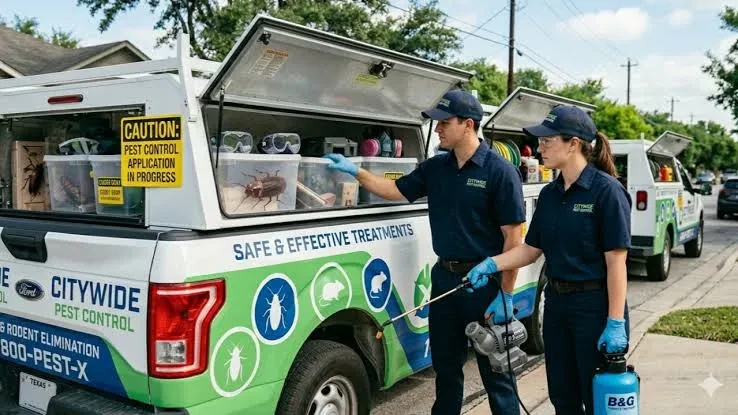 The Pests That Matter Most in 2026
Not all pests are created equal. Some are merely annoying; others can cause structural damage or serious health risks. Understanding which pest you’re dealing with is the first step toward an effective solution.
Rodents (mice and rats): They contaminate food, chew through wires, and can carry disease. They often enter homes in cooler months looking for warmth and shelter. Ants and cockroaches: Year-round nuisances that contaminate surfaces and spread bacteria. Cockroaches can trigger allergies and asthma. Termites: The most destructive pest for wooden structures. Colonies can go undetected for years, causing thousands of dollars in damage. Bed bugs: Notorious for being difficult to eliminate. They spread through travel and shared spaces and require specialized treatment. Spiders, wasps, and other occasional invaders: Usually more of a nuisance than a threat, but some species can pose health risks.
Each pest requires a tailored approach. A treatment that works for ants won’t touch termites, and a DIY spray won’t solve a bed bug infestation.
Modern Pest Control Methods: What’s Available
Pest control in 2026 is not just about spraying chemicals. The industry has evolved into a multi-disciplinary field that combines several strategies.
Chemical Treatments
These remain the most common and immediate solution. Depending on the pest, professionals may use: Sprays and aerosols for crawling insects Baits and gels for ants, roaches, and rodents Dusts for wall voids and cracks Fumigants for severe infestations (e.g., whole-house termite treatments)
Modern chemicals are more targeted and lower in toxicity than older products, but they still require careful application.
Biological Control
This approach uses natural predators, parasites, or pathogens to manage pests. It is common in agriculture and increasingly used in sensitive residential settings. Examples include introducing ladybugs to control aphids or using nematodes to kill lawn grubs.
Physical and Mechanical Methods
Traps, barriers, exclusion techniques, and heat treatments fall into this category. Heat treatment, for example, is a chemical-free way to kill bed bugs by raising the temperature of a room to lethal levels.
Integrated Pest Management (IPM)
IPM is a holistic strategy that combines inspection, identification, monitoring, and a mix of chemical, biological, and physical controls. The goal is long-term suppression with minimal risk to people and the environment. Most reputable pest control companies now follow IPM principles.
What Drives Pest Control Costs in 2026?
The price of pest control varies widely. Two identical homes on the same street could receive quotes that differ by hundreds of dollars. The reasons come down to several key factors.
| Factor | How It Affects Cost |
|---|---|
| Type of pest | Termites and bed bugs cost far more to treat than ants or spiders. |
| Severity of infestation | A minor problem may need one visit; a severe infestation may require multiple treatments. |
| Property size and type | A small apartment costs less to treat than a large commercial warehouse. |
| Location | Labor rates, regulations, and regional pest prevalence vary by geography. |
| Treatment method | Heat treatment, fumigation, and exclusion work cost more than simple spraying. |
| Frequency | One-time treatments are cheaper upfront; ongoing maintenance plans cost more over time but prevent future problems. |
| Accessibility | Hard-to-reach areas (attics, crawl spaces, wall voids) increase labor. |
Understanding these variables helps you anticipate costs and compare quotes fairly.
Typical Cost Ranges for Common Pest Problems
Below are general estimates for 2026. Actual prices depend on your specific situation, location, and provider.
| Pest | Typical Treatment Cost | Notes |
|---|---|---|
| Ants | $150–$350 for initial treatment | Quarterly plans: $40–$70 per visit |
| Cockroaches | $150–$400 | May require multiple visits |
| Rodents | $200–$600 | Includes traps, bait, and exclusion work |
| Termites | $500–$2,500 (localized); $5,000+ (whole-house) | Bait systems, liquid treatments, or fumigation |
| Bed bugs | $300–$1,500 per room | Heat treatment is often more expensive |
| Spiders | $100–$300 | Usually part of a general pest plan |
| Wasps/hornets | $100–$400 | Removal of nests; higher for large or inaccessible nests |
| Fleas | $150–$400 | Often requires treating pets and yard as well |
These figures are for professional services. DIY products typically cost $20–$100 but may not resolve serious infestations.
DIY vs. Professional Pest Control: A Realistic Comparison
Many homeowners start with store-bought sprays and traps. For a few ants or an occasional spider, that may be enough. But for recurring or severe problems, DIY often fails—and can even make things worse.
DIY pros: Low upfront cost Immediate availability Satisfying for minor, isolated issues
DIY cons: Limited potency and precision Misidentification of pests leads to wrong treatment Safety risks if chemicals are misused No warranty or guarantee May prolong the infestation, leading to higher costs later
Professional pros: Accurate identification and customized treatment Access to professional-grade products and equipment Safe application following regulations Warranties and follow-up visits Long-term prevention strategies
Professional cons: Higher initial cost Requires scheduling and trusting a provider
For termites, bed bugs, and widespread rodent issues, professional help is almost always the better investment. The cost of letting a problem grow usually exceeds the cost of treating it early.
Long-Term Prevention: The Smartest Investment
The most cost-effective pest control is prevention. A few simple habits can make your property far less attractive to pests.
Seal entry points: Cracks in foundations, gaps around utility lines, and torn window screens. Eliminate moisture: Fix leaky pipes, remove standing water, and use dehumidifiers in damp areas. Store food properly: Use sealed containers for pantry items and pet food. Keep it clean: Wipe up crumbs, take out trash regularly, and avoid clutter. Maintain the exterior: Trim shrubs away from the house, remove leaf litter, and keep firewood off the ground. Regular inspections: Check for signs of pests monthly, especially in basements, attics, and crawl spaces.
Many pest control companies offer ongoing maintenance plans that include periodic inspections and preventative treatments. These plans cost more than a one-time service but can save money by stopping infestations before they start.
Environmental and Safety Considerations
In 2026, safety and environmental responsibility are major concerns for pest control. Many modern products are designed to be less toxic and more targeted. But any chemical treatment carries some risk, especially for children, pets, and people with respiratory conditions.
What to ask your provider: What products will you use? Can you provide safety data sheets? Do we need to leave the premises during treatment? How long after treatment is it safe to return? Are there non-chemical options for my situation?
Integrated Pest Management (IPM) prioritizes the least toxic methods first. A reputable company will explain their approach and use chemicals only when necessary. They will also follow all local, state, and federal regulations.
Understanding Service Contracts and Warranties
Before you sign anything, read the fine print. Pest control contracts vary widely.
One-time service: Treats a specific problem. No ongoing commitment. May not include follow-up if pests return.
Monthly/quarterly plans: Include regular inspections and preventative treatments. Usually cost more overall but offer continuous protection.
Warranties: Many companies guarantee their work. If the target pest returns within a specified period, they will re-treat at no extra cost. Termite warranties are often extensive and may be transferable if you sell the home.
Key questions: What pests are covered? How long does the warranty last? What conditions void the warranty? Is there a cancellation fee? What is the response time for re-treatment?
A clear contract protects both you and the provider.
Innovations in Pest Control Technology
Technology is changing how pests are detected and treated.
Smart monitoring: Sensors and cameras can detect pest activity early, allowing targeted intervention before an infestation spreads. Drones: Used for inspecting large properties, roofs, and agricultural fields. Advanced baiting systems: More effective and localized for termites and rodents. Biological research: New predators, parasites, and pathogens are being developed as eco-friendly alternatives. Data analytics: Companies use data to predict pest activity based on weather, season, and location.
These innovations aim to make pest control more precise, less invasive, and more environmentally friendly. They may also reduce costs over time by preventing large-scale infestations.
How to Choose a Reputable Pest Control Provider
Not all pest control companies are equal. Use this checklist to find a trustworthy provider.
- Licensing and insurance: Verify with your state or local regulatory agency.
- Experience: Ask how long they’ve been in business and whether they specialize in your pest problem.
- Reviews and referrals: Check Google, Yelp, and the Better Business Bureau. Ask neighbors.
- Inspection: A good provider will inspect before quoting. Be wary of phone quotes without seeing the property.
- Written estimate: Get a detailed, written quote that explains the scope of work, products, and warranty.
- IPM approach: Ask if they use Integrated Pest Management.
- Safety protocols: Ask about product safety and re-entry times.
- Warranty: Understand what is covered and for how long.
- No pressure: Avoid companies that pressure you into immediate decisions.
- Clear communication: They should explain the problem and solution in plain language.
Budgeting for Pest Control
How much should you set aside? It depends on your risk level and property type.
Low-risk, proactive maintenance: $200–$500 per year for quarterly inspections and preventative treatments. Moderate risk (occasional pests): $300–$800 per year. High risk (termite-prone areas, older homes): $500–$1,500+ per year, including termite monitoring. Emergency treatment: $200–$2,000+ depending on the pest and severity.
Prevention is almost always cheaper than cure. A $400 annual maintenance plan can prevent a $5,000 termite repair.
Regulatory Landscape and Compliance
Pest control is heavily regulated. Federal, state, and local agencies set rules for pesticide use, licensing, and safety. Reputable companies comply with all applicable laws. They:
Hold valid licenses and certifications. Use approved products according to label instructions. Store and dispose of chemicals safely. Carry insurance. Follow IPM principles.
If a company cannot provide proof of licensing or insurance, walk away.
A Decision Framework: Matching Treatment to Your Needs
Use this framework to choose the right approach.
- Identify the pest. If unsure, get a professional inspection.
- Assess severity. A few ants? DIY may work. A termite swarm? Call a pro.
- Consider your budget. But don’t let price be the only factor. Cheap treatments that fail cost more in the long run.
- Evaluate safety. Ask about products and re-entry times.
- Check warranties. A guarantee gives you recourse if the problem returns.
- Compare providers. Get at least three quotes.
- Think long term. Ongoing maintenance is usually more cost-effective than repeated emergency treatments.
- Read the contract. Understand what you’re signing.
- Stay proactive. Prevention is the best investment.
Final Thoughts
Pest control in 2026 is more sophisticated, more regulated, and more effective than ever. But it’s also more complex. The right treatment depends on the pest, the severity, your property, and your budget. DIY can work for minor issues, but for serious infestations, professional help is worth the cost. Look for a licensed, insured provider who uses Integrated Pest Management, offers warranties, and communicates clearly. Invest in prevention, and you’ll spend less on treatments over time. A pest-free property is not a luxury—it’s a manageable goal with the right strategy and the right partner.


