
'%20fill='%23fff'/%3e%3c/clipPath%3e%3c/defs%3e%3cg%20id='logo_s'%20transform='translate(3331%2011131)'%20clip-path='url(%23clip-path)'%3e%3ccircle%20id='椭圆_3510'%20data-name='椭圆%203510'%20cx='15'%20cy='15'%20r='15'%20transform='translate(-3330%20-11130)'%20fill='%23ffffff'%20opacity='0'/%3e%3cpath%20id='联合_790'%20data-name='联合%20790'%20d='M17,22.938H3.615a3.694,3.694,0,0,1-2.759-.895A3.625,3.625,0,0,1,0,19.454V3.489C.031,1.194,1.2.087,3.689.005H13.43L13.492,0V3.98a3,3,0,0,0,3,3h4.193V19.454c-.025,1.589-.662,3.485-3.554,3.485ZM5.8,16.588a.88.88,0,0,0,.879.879H14.1a.879.879,0,0,0,0-1.759H6.681A.88.88,0,0,0,5.8,16.588Zm0-3.836a.88.88,0,0,0,.879.879H14.1a.88.88,0,0,0,0-1.759H6.681A.881.881,0,0,0,5.8,12.752Zm0-3.837a.88.88,0,0,0,.879.879h4.783a.879.879,0,1,0,0-1.759H6.681A.88.88,0,0,0,5.8,8.915ZM17.031,5.5a2,2,0,0,1-2-2V.365a1.9,1.9,0,0,1,.3.235c.564.547,2.329,2.146,3.5,3.2l.068.061.886.8a2.8,2.8,0,0,1,.636.834Z'%20transform='translate(-3325.342%20-11126.47)'%20fill='%23ffffff'/%3e%3c/g%3e%3c/svg%3e)


 1. Prostatitis: More Than Just an Infection
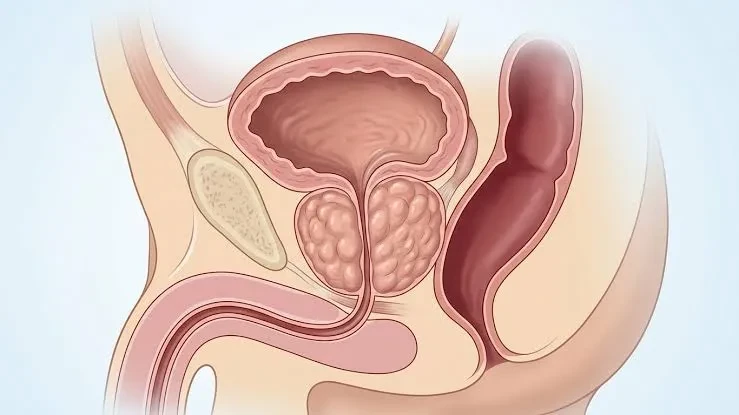 1. Prostatitis: More Than Just an Infection
Prostatitis is the most common urologic diagnosis in men under 50, but it is not a single disease. The NIH classifies it into four categories:
Acute bacterial prostatitis – Sudden fever, chills, pelvic pain, and painful urination. Treated urgently with antibiotics. Chronic bacterial prostatitis – Recurrent urinary tract infections with bacteria found in prostate fluid. Chronic prostatitis / chronic pelvic pain syndrome (CP/CPPS) – The most common type, accounting for over 90% of cases. No infection is found. Symptoms include pelvic pain, urinary urgency, and discomfort. Asymptomatic inflammatory prostatitis – Found incidentally during biopsy or semen analysis.
Treatment Approaches
Bacterial prostatitis: Antibiotics are the cornerstone. Acute cases may require IV antibiotics; chronic cases need 4–6 weeks or longer of oral therapy. Common classes: fluoroquinolones, tetracyclines, macrolides. Choice depends on culture results. Alpha-blockers may be added to relieve urinary symptoms.
CP/CPPS: reatment is often multimodal: Alpha-blockers (tamsulosin, silodosin) to relax prostate and bladder neck muscles. NSAIDs for pain and inflammation. Anticholinergics for urinary urgency. Neuromodulators (amitriptyline, pregabalin) for nerve-related pain. Pelvic floor physical therapy, biofeedback, and myofascial release. Heat therapy, sitz baths, and acupuncture may help some men. Lifestyle changes: avoid prolonged sitting, spicy foods, excess alcohol; regular ejaculation, warm baths, and gentle exercise can ease symptoms.
Prostatitis can be frustrating and long-lasting. Patience and a good partnership with a urologist are essential.
2. Benign Prostatic Hyperplasia (BPH): Moving Beyond "Just Live With It"
BPH is a non-cancerous enlargement of the prostate that compresses the urethra. It causes frequent urination, urgency, nocturia, weak stream, straining, and incomplete emptying. It affects about half of men over 60 and up to 90% of men over 85.
Treatment depends on symptom severity, impact on quality of life, and complications.
| Approach | Best For | Examples | Pros | Cons |
|---|---|---|---|---|
| Watchful waiting | Mild symptoms | Lifestyle changes, periodic check-ups | Avoids unnecessary treatment | Symptoms may worsen |
| Medication | Moderate symptoms | Alpha-blockers, 5-alpha reductase inhibitors, anticholinergics, PDE5 inhibitors | Non-invasive, effective for many | Long-term use, possible sexual side effects |
| Minimally invasive | Medication failure or intolerance | UroLift, Rezum, TUMT, TUNA | Quick recovery, less bleeding | Long-term durability varies |
| Surgery | Severe symptoms, recurrent retention, infections, stones | TURP, HoLEP, ThuLEP, laser vaporization | Durable, effective | Bleeding, retrograde ejaculation, longer recovery |
| Prostatic artery embolization | High-risk surgical candidates | Interventional radiology | Minimally invasive | Requires expertise, long-term data limited |
Medication details: Alpha-blockers (tamsulosin, doxazosin, silodosin) relax smooth muscle. Work within days. Side effects: dizziness, retrograde ejaculation. 5-alpha reductase inhibitors (finasteride, dutasteride) shrink the prostate over months. Best for larger prostates. Side effects: reduced libido, erectile dysfunction. Combination therapy may be used for moderate-to-severe symptoms. Anticholinergics (oxybutynin, tolterodine) help with urgency but can worsen retention. PDE5 inhibitors (tadalafil) improve urinary symptoms and erectile function.
Minimally invasive procedures: UroLift – small implants hold the prostate open. No cutting, preserves ejaculation. Best for smaller prostates. Rezum – steam injections destroy excess tissue. Office-based, quick recovery. TUMT/TUNA – heat or needles destroy tissue. Less common now.
Surgical options: TURP – the historical gold standard. Resects tissue through the urethra. Effective but can cause bleeding and retrograde ejaculation. HoLEP / ThuLEP – laser enucleation. Excellent for large prostates, less bleeding, but requires skill. Laser vaporization (PVP) – quick, effective, good for men on blood thinners. Open prostatectomy – for very large prostates, now rare.
3. Prostate Cancer: A Spectrum of Disease
Prostate cancer is the most common cancer in American men (excluding skin cancer). Many cases are slow-growing and may never cause harm, while others are aggressive and life-threatening. Treatment depends on risk category (based on PSA, Gleason score, and stage), age, overall health, and patient preferences.
Active Surveillance
For low-risk, slow-growing cancer, active surveillance is often recommended. It involves regular PSA tests, digital rectal exams, and repeat biopsies or MRI. Treatment is delayed until the cancer shows signs of progression. This avoids overtreatment and side effects.
Surgery: Radical Prostatectomy
Removal of the prostate gland. Options include open, laparoscopic, and robot-assisted (da Vinci). Robot-assisted is most common in the U.S. Pros: Cancer control, ability to confirm pathology. Cons: Incontinence (temporary or permanent), erectile dysfunction, longer recovery. Nerve-sparing techniques can preserve erectile function in suitable patients.
Radiation Therapy
External beam radiation (EBRT): Daily sessions over several weeks. Techniques like IMRT and SBRT (stereotactic body radiation) allow higher doses with less damage to surrounding tissue. Brachytherapy: Radioactive seeds implanted directly into the prostate. Can be permanent or temporary (high-dose rate). Pros: No surgery, outpatient. Cons: Urinary and bowel side effects, erectile dysfunction over time.
Hormone Therapy (Androgen Deprivation Therapy)
Lowers testosterone to starve prostate cancer cells. LHRH agonists/antagonists (leuprolide, degarelix) – injections. Antiandrogens (bicalutamide, enzalutamide, apalutamide) – pills. Used for: Advanced or metastatic cancer, with radiation for high-risk localized disease, or before surgery. Side effects: Hot flashes, loss of libido, erectile dysfunction, bone loss, fatigue, mood changes.
Chemotherapy
Docetaxel and cabazitaxel for metastatic castration-resistant prostate cancer. Side effects: Nausea, hair loss, fatigue, low blood counts.
Immunotherapy
Sipuleucel-T (Provenge) – a personalized vaccine for certain metastatic cases. Pembrolizumab – for tumors with specific genetic markers (MSI-high or dMMR).
Targeted Therapy
PARP inhibitors (olaparib, rucaparib) for men with BRCA1/2 or other DNA repair mutations. PSMA-targeted therapy (lutetium-177 PSMA-617) – a radioligand therapy for advanced disease.
Focal Therapy
For select low- to intermediate-risk cancers, focal therapy treats only the tumor area, preserving surrounding tissue. HIFU (high-intensity focused ultrasound) Cryotherapy Focal laser ablation Irreversible electroporation Pros: Less collateral damage, faster recovery. Cons: Less long-term data, risk of recurrence, not widely available.
4. Choosing the Right Treatment
No single treatment is right for everyone. Factors to consider:
Type and stage of disease – Prostatitis vs. BPH vs. cancer. Aggressiveness of cancer – Gleason score, PSA doubling time. Age and life expectancy – Older men with slow-growing cancer may not benefit from aggressive treatment. Overall health – Heart disease, diabetes, and other conditions affect surgical risk. Symptoms and quality of life – How much do urinary symptoms bother you? Side effect tolerance – Incontinence, erectile dysfunction, bowel issues. Personal preferences – Some men want cancer gone at any cost; others prioritize quality of life.
Multidisciplinary care is ideal. A team including a urologist, radiation oncologist, and medical oncologist can present all options. Second opinions are encouraged.
5. Emerging and Future Therapies
PSMA PET imaging – More accurate staging and detection of recurrence. Genomic testing – Oncotype DX, Decipher, Prolaris help predict cancer aggressiveness. Focal therapy refinements – Better targeting, less collateral damage. Immunotherapy combinations – Checkpoint inhibitors plus vaccines. Radiopharmaceuticals – New PSMA-targeted agents. Artificial intelligence – Improving diagnosis and treatment planning.
6. Living With Prostate Conditions
Diet and lifestyle: A Mediterranean-style diet, regular exercise, maintaining a healthy weight, and limiting red meat and dairy may help. Pelvic floor exercises: Strengthen muscles to improve incontinence after surgery. Support groups: Many men find comfort and practical advice from others. Mental health: Depression and anxiety are common; seek support if needed. Follow-up care: Regular PSA tests, imaging, and check-ups are essential.
Frequently Asked Questions
Is prostatitis curable? Bacterial prostatitis can be cured with antibiotics. Chronic pelvic pain syndrome is often managed rather than cured, but symptoms can improve significantly with multimodal therapy.
Can BPH turn into cancer? No. BPH is benign. However, BPH and prostate cancer can coexist, so men with BPH should still be screened for cancer.
What is the best treatment for prostate cancer? It depends on risk level, age, health, and preferences. Active surveillance, surgery, radiation, and hormone therapy are all valid options. A multidisciplinary team can help you decide.
Does treatment always cause erectile dysfunction? Not always. Nerve-sparing surgery and certain radiation techniques can preserve erectile function in some men. However, it is a common side effect and should be discussed openly.
Are there natural treatments for prostate problems? Some supplements (saw palmetto, beta-sitosterol) may help BPH symptoms, but evidence is mixed. They do not treat cancer. Always talk to your doctor before taking supplements.
How often should I get my prostate checked? Discuss screening with your doctor. Most guidelines recommend shared decision-making starting at age 50 (or 45 for high-risk men).
Final Thoughts
Prostate conditions are common, but they are not one-size-fits-all. From prostatitis to BPH to cancer, modern medicine offers more options than ever—many with fewer side effects and faster recovery than in the past. The key is early evaluation, accurate diagnosis, and a treatment plan tailored to your specific situation and values.
If you are experiencing urinary symptoms, pelvic pain, or an abnormal PSA test, do not delay. See a urologist, ask questions, and explore your options. With the right care, most men can maintain a good quality of life while effectively managing their prostate health.


