
'%20fill='%23fff'/%3e%3c/clipPath%3e%3c/defs%3e%3cg%20id='logo_s'%20transform='translate(3331%2011131)'%20clip-path='url(%23clip-path)'%3e%3ccircle%20id='椭圆_3510'%20data-name='椭圆%203510'%20cx='15'%20cy='15'%20r='15'%20transform='translate(-3330%20-11130)'%20fill='%23ffffff'%20opacity='0'/%3e%3cpath%20id='联合_790'%20data-name='联合%20790'%20d='M17,22.938H3.615a3.694,3.694,0,0,1-2.759-.895A3.625,3.625,0,0,1,0,19.454V3.489C.031,1.194,1.2.087,3.689.005H13.43L13.492,0V3.98a3,3,0,0,0,3,3h4.193V19.454c-.025,1.589-.662,3.485-3.554,3.485ZM5.8,16.588a.88.88,0,0,0,.879.879H14.1a.879.879,0,0,0,0-1.759H6.681A.88.88,0,0,0,5.8,16.588Zm0-3.836a.88.88,0,0,0,.879.879H14.1a.88.88,0,0,0,0-1.759H6.681A.881.881,0,0,0,5.8,12.752Zm0-3.837a.88.88,0,0,0,.879.879h4.783a.879.879,0,1,0,0-1.759H6.681A.88.88,0,0,0,5.8,8.915ZM17.031,5.5a2,2,0,0,1-2-2V.365a1.9,1.9,0,0,1,.3.235c.564.547,2.329,2.146,3.5,3.2l.068.061.886.8a2.8,2.8,0,0,1,.636.834Z'%20transform='translate(-3325.342%20-11126.47)'%20fill='%23ffffff'/%3e%3c/g%3e%3c/svg%3e)


 What Is Polycarbonate Roofing?
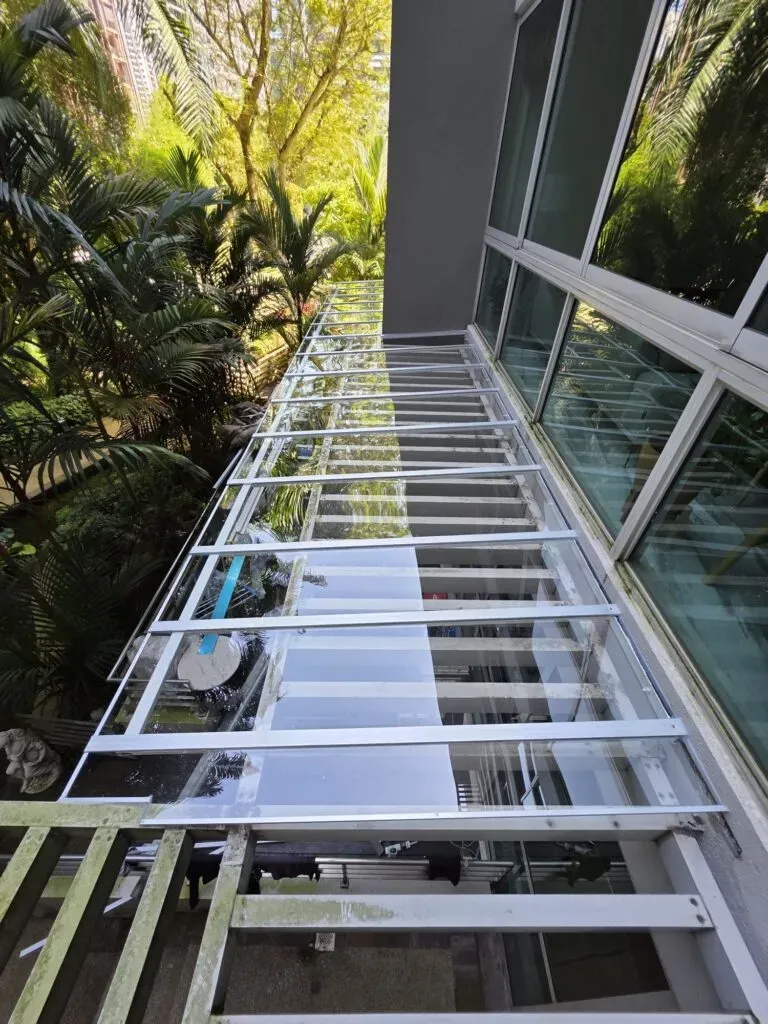 What Is Polycarbonate Roofing?
Polycarbonate roofing is made from a thermoplastic polymer known for its exceptional strength and clarity. The material is available in solid sheets, multiwall panels, and corrugated profiles. Multiwall polycarbonate—often called twin-wall or triple-wall—contains internal channels that improve insulation while keeping the panels lightweight.
Unlike glass, polycarbonate does not shatter easily. It can withstand impacts from hail, debris, and accidental contact. It also blocks most ultraviolet (UV) radiation, protecting people and materials underneath from sun damage. These properties make it suitable for both residential and commercial installations.
Key Benefits of Polycarbonate Roofing
1. High Impact Resistance Polycarbonate is many times stronger than glass and acrylic. It resists cracking, breaking, and shattering, which makes it a safer choice for roofs in areas prone to storms or falling debris.
2. Lightweight and Easy to Install Polycarbonate sheets weigh far less than glass, making them easier to transport, lift, and install. This can reduce labor costs and shorten project timelines.
3. Excellent Light Transmission Depending on the type and thickness, polycarbonate can transmit up to 90% of natural light. This makes it ideal for spaces that need bright, diffused daylight without the harshness of direct sun.
4. UV Protection Most polycarbonate roofing includes a UV-resistant coating. This protects the material from yellowing and degradation while shielding the area below from harmful UV rays.
5. Thermal Insulation Multiwall polycarbonate provides good thermal insulation. The air pockets inside the panels reduce heat transfer, helping maintain a more stable indoor temperature and potentially lowering energy costs.
6. Weather Resistance Polycarbonate performs well in extreme temperatures, rain, snow, and wind. It does not rust or corrode like metal, and it resists rot and moisture damage.
7. Design Flexibility Available in clear, tinted, opal, and bronze finishes, polycarbonate can be curved, cut, and shaped to fit many design requirements. It works well in both modern and traditional structures.
Common Applications of Polycarbonate Roofing
Polycarbonate roofing is used in a wide range of residential, commercial, and agricultural settings.
Residential uses: Patio covers and pergolas Carports and bike shelters Skylights and conservatories Greenhouse roofs and walls Shed and porch roofing
Commercial uses: Warehouse and factory skylights Sports facility canopies Swimming pool enclosures Walkway and entrance canopies Agricultural buildings and livestock shelters
Specialty uses: Sound barriers Bus shelters Signage and display covers Architectural features and atriums
In each case, polycarbonate provides protection from the elements while allowing natural light to enter.
Polycarbonate vs. Other Roofing Materials
| Feature | Polycarbonate | Glass | Metal | Acrylic |
|---|---|---|---|---|
| Impact resistance | Excellent | Poor | Good | Moderate |
| Light transmission | Excellent | Excellent | None | Excellent |
| Weight | Light | Heavy | Moderate | Light |
| Shatter resistance | Yes | No | N/A | Yes, but less than PC |
| UV protection | Good (with coating) | Varies | N/A | Fair |
| Thermal insulation | Good (multiwall) | Poor | Fair | Fair |
| Cost | Moderate | High | Moderate to high | Moderate |
| Ease of installation | Easy | Difficult | Moderate | Easy |
Polycarbonate is often chosen when a project needs both strength and transparency. It is safer than glass, lighter than metal, and more impact-resistant than acrylic.
Types of Polycarbonate Roofing
Solid polycarbonate sheets offer the highest clarity and impact resistance. They are often used where maximum light transmission and security are required.
Multiwall polycarbonate sheets have internal ribs that provide insulation. They are available in twin-wall, triple-wall, and multiwall configurations. These are common in greenhouses, conservatories, and skylights.
Corrugated polycarbonate sheets have a wavy profile that mimics metal roofing. They are used for larger roof areas where strength and drainage are important.
Coated and tinted sheets include additional layers for UV protection, glare reduction, or privacy. Bronze, opal, and grey tints are popular for reducing heat and glare.
Considerations Before Choosing Polycarbonate Roofing
1. Thickness and Structure Thicker panels offer greater strength and insulation but cost more and weigh more. Choose based on span, load requirements, and climate.
2. Thermal Expansion Polycarbonate expands and contracts with temperature changes. Installation must allow for movement; otherwise, panels may buckle or crack. Use oversized holes and expansion washers.
3. UV Protection Not all polycarbonate sheets have the same UV protection. Cheaper products may yellow or become brittle over time. Look for sheets with a co-extruded UV layer.
4. Condensation Control Multiwall panels can accumulate condensation in the channels. Some manufacturers offer anti-condensation coatings or recommend sealing and ventilation strategies.
5. Noise Rain and hail can be loud on polycarbonate roofs. If noise is a concern, consider thicker multiwall panels or additional insulation.
6. Cleaning and Maintenance Polycarbonate should be cleaned with mild soap and water. Avoid abrasive cleaners, solvents, and high-pressure washing, which can damage the surface.
7. Fire Rating Check local building codes for fire performance requirements. Polycarbonate can burn, though many products include flame retardants.
8. Load-Bearing Capacity Snow and wind loads vary by region. Ensure the panels and supporting structure are engineered to meet local requirements.
Installation Tips
Slope for drainage: Install with a minimum slope (usually 5–10 degrees) so water runs off. Use proper fasteners: Screws with neoprene washers allow for expansion and prevent leaks. Allow expansion gaps: Leave space at edges and between panels. Seal ends: Use U-profile or anti-dust tape on multiwall panel ends to keep out insects and moisture. Follow manufacturer instructions: Each product has specific guidelines for span, fixing, and sealing. Consider professional installation: For large or complex roofs, hiring an experienced installer is recommended.
Maintenance and Longevity
With proper installation and care, polycarbonate roofing can last 10–20 years or more. Regular maintenance includes: Cleaning with mild soap and water Inspecting seals and fasteners annually Removing debris that can trap moisture Checking for cracks or discoloration Replacing damaged panels promptly
Avoid walking directly on the panels unless they are rated for foot traffic. Use plywood boards to distribute weight if access is necessary.
Frequently Asked Questions
Is polycarbonate roofing good for hot climates? Yes, if you choose heat-reflective or tinted panels. Multiwall polycarbonate with UV protection can reduce heat gain while allowing light.
Can polycarbonate roofing be used for a primary roof? It is often used for secondary structures, canopies, and covered areas. For a primary residence roof, it is less common but possible with proper engineering and support.
Does polycarbonate roof block UV rays? Most quality polycarbonate sheets block up to 99% of UV radiation, protecting people and furnishings below.
Is polycarbonate stronger than glass? Yes. Polycarbonate is many times more impact-resistant than glass and does not shatter into sharp pieces.
How long does polycarbonate roofing last? With proper installation and maintenance, 10–20 years is typical. Cheaper panels may degrade faster.
Can polycarbonate be painted? It is generally not recommended. Painting can block light and may not adhere well. Use tinted or coated panels instead.
Final Thoughts
Polycarbonate roofing is a practical, durable, and attractive option for many building projects. It combines the light transmission of glass with the strength of modern polymers, making it ideal for greenhouses, patios, carports, skylights, and commercial canopies. By understanding the different types, considering thermal expansion and UV protection, and following proper installation practices, you can enjoy a roof that is both functional and long-lasting.
Whether you are a DIY enthusiast or working with a professional contractor, polycarbonate roofing offers a versatile solution that can enhance your space while withstanding the elements.


