
'%20fill='%23fff'/%3e%3c/clipPath%3e%3c/defs%3e%3cg%20id='logo_s'%20transform='translate(3331%2011131)'%20clip-path='url(%23clip-path)'%3e%3ccircle%20id='椭圆_3510'%20data-name='椭圆%203510'%20cx='15'%20cy='15'%20r='15'%20transform='translate(-3330%20-11130)'%20fill='%23ffffff'%20opacity='0'/%3e%3cpath%20id='联合_790'%20data-name='联合%20790'%20d='M17,22.938H3.615a3.694,3.694,0,0,1-2.759-.895A3.625,3.625,0,0,1,0,19.454V3.489C.031,1.194,1.2.087,3.689.005H13.43L13.492,0V3.98a3,3,0,0,0,3,3h4.193V19.454c-.025,1.589-.662,3.485-3.554,3.485ZM5.8,16.588a.88.88,0,0,0,.879.879H14.1a.879.879,0,0,0,0-1.759H6.681A.88.88,0,0,0,5.8,16.588Zm0-3.836a.88.88,0,0,0,.879.879H14.1a.88.88,0,0,0,0-1.759H6.681A.881.881,0,0,0,5.8,12.752Zm0-3.837a.88.88,0,0,0,.879.879h4.783a.879.879,0,1,0,0-1.759H6.681A.88.88,0,0,0,5.8,8.915ZM17.031,5.5a2,2,0,0,1-2-2V.365a1.9,1.9,0,0,1,.3.235c.564.547,2.329,2.146,3.5,3.2l.068.061.886.8a2.8,2.8,0,0,1,.636.834Z'%20transform='translate(-3325.342%20-11126.47)'%20fill='%23ffffff'/%3e%3c/g%3e%3c/svg%3e)


 What Is Cremation?
 What Is Cremation?
Cremation is the process of reducing a deceased body to its basic mineral components through intense heat and evaporation. What remains after the process is not literally "ash" in the sense of burnt wood, but rather bone fragments that are processed into a fine, consistent powder. These remains can be kept, buried, scattered, or incorporated into memorial items.
Cremation is permitted in most countries and is accepted by many religious traditions, though some faiths have specific requirements or prohibitions. It is often chosen for its flexibility, lower cost compared to traditional burial, and environmental considerations.
Step 1: Making Initial Arrangements
The process begins with selecting a reputable funeral home or cremation provider. This is a critical decision, as the provider will handle legal paperwork, transportation, and the cremation itself.
What to discuss with your provider: The type of cremation (traditional flame cremation, witnessed cremation, or alkaline hydrolysis, where available) Whether you want a viewing or service before cremation The type of urn or container you prefer Any religious or cultural requirements Costs and payment options
Once a provider is chosen, necessary legal documents are completed. These typically include: A certified death certificate A cremation permit or authorization from the local health department Signed consent from the next of kin or executor
The provider usually assists with these formalities. Families should receive copies of all documents for their records.
Step 2: Preparing the Body
Before cremation, the body is prepared in accordance with legal requirements and family wishes.
Key steps in preparation: Removal of medical devices: Pacemakers, defibrillators, and other implants with batteries must be removed because they can explode or cause damage during cremation. Other implants, such as metal joints, are typically left in place but may be recovered afterward. Removal of personal items: Jewelry, glasses, and other belongings are removed unless the family specifically requests otherwise. These items are returned to the family. Placement in a cremation container: The body is placed in a combustible container, usually made of wood, cardboard, or wicker. Most crematories require a rigid, leak-proof container. Families may provide their own or purchase one from the provider. Viewing or service: If desired, a viewing or funeral service can be held before cremation. This allows family and friends to say goodbye in a respectful setting.
Step 3: The Cremation Process
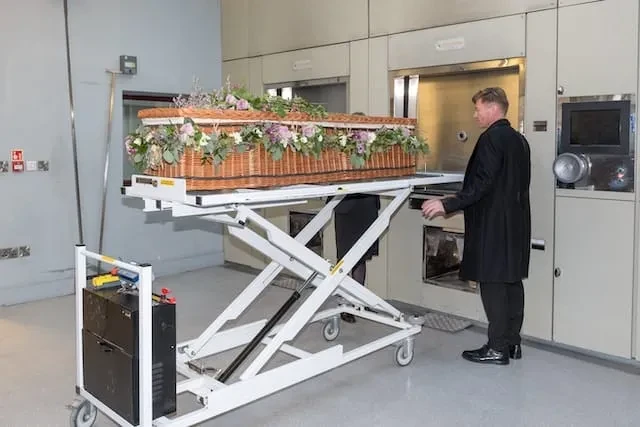
The cremation itself takes place in a specially designed furnace called a cremation chamber or retort.
What happens inside the chamber: The chamber is preheated to temperatures between 1,400°F and 2,000°F (760°C to 1,100°C). The container and body are placed inside. The intense heat causes evaporation of soft tissues and reduction of the body to bone fragments. The process typically takes 1.5 to 4 hours, depending on the size of the individual and the type of chamber. Only one body is cremated at a time. This is a legal requirement in most jurisdictions to ensure the integrity of the remains. The cremation is monitored throughout to ensure safety and proper completion.
Some crematories allow family members to witness the start of the cremation. This can be a meaningful way to say goodbye for some, while others prefer to remember their loved one as they were.
Step 4: Processing the Remains
After the cremation is complete, the remains are allowed to cool. They are then processed.
The processing stage: Bone fragments are collected from the chamber. Any metal implants (such as hip replacements or dental work) are removed using a magnet or manual sorting. These are usually recycled or disposed of according to local regulations. The fragments are placed in a cremulator, a machine that grinds them into a fine, uniform powder. The resulting ashes are transferred into a temporary container or an urn chosen by the family.
The entire process is handled with care and respect. Reputable providers maintain strict identification protocols to ensure that the correct ashes are returned to the correct family.
Step 5: Receiving the Ashes
The ashes are returned to the family in a container of their choosing. This moment can be both difficult and healing—a tangible reminder of a life lived.
Options for the ashes: Keeping them at home: Many families place the urn in a special location, such as a mantelpiece or a memorial shelf. Scattering: Ashes can be scattered in a meaningful place—a garden, a favorite beach, or a mountain. If scattering on public land, check local regulations. Biodegradable urns are available for this purpose. Burial: Ashes can be buried in a cemetery plot, sometimes in a smaller grave or columbarium niche. Memorial objects: Ashes can be incorporated into jewelry, glass art, or even mixed into concrete for a reef memorial. Dividing: Some families divide the ashes among several loved ones so each can keep a portion.
Providers often offer a range of urns, from simple and affordable to highly decorative. Families should choose based on their preferences and plans.
Step 6: Memorial Services
A memorial service can be held before or after cremation. It offers an opportunity for friends and family to gather, share memories, and support one another.
Ways to personalize a memorial service: Choose a meaningful location: a place of worship, a community center, a favorite park, or the family home. Include music, readings, or poems that were meaningful to the deceased. Display photographs, mementos, or a slideshow of their life. Invite guests to share stories or write messages in a memory book. Incorporate cultural or religious traditions. Consider a reception or gathering after the service to allow for informal connection.
Some families also choose to hold a separate scattering ceremony or a dedication of a memorial bench or tree.
Additional Insights and Considerations
Costs
Cremation is generally less expensive than a traditional burial, but costs vary widely depending on the provider, location, and services selected. Basic cremation (without a service) may cost a few hundred to a few thousand dollars. A full-service cremation with viewing and memorial can cost significantly more. Families should request an itemized price list.
Environmental Impact
Traditional flame cremation uses natural gas and releases carbon emissions. Some providers offer more environmentally friendly options, such as: Alkaline hydrolysis (also called water cremation or resomation), which uses water and potassium hydroxide instead of flame. Green cremation with reduced emissions. Biodegradable urns for scattering or burial.
If environmental impact is a concern, ask providers about their sustainability practices.
Legal Requirements
Laws governing cremation vary by country, state, and province. Common requirements include: A waiting period (often 24 to 48 hours) before cremation can occur. A signed cremation authorization form from the next of kin. A medical examiner's approval in certain circumstances. Compliance with local health and environmental regulations.
A reputable provider will guide you through these requirements.
Pre-Planning
Many people choose to pre-plan their own cremation to spare loved ones from making difficult decisions during grief. Pre-planning can include: Selecting a provider and locking in pricing. Documenting preferences for the service, urn, and disposition of ashes. Setting aside funds in a funeral trust or prepaid plan.
Pre-planning is a thoughtful gift to family members and ensures that your wishes are known and honored.
Choosing a Provider
When selecting a cremation provider, consider: Licensing and reputation Transparency in pricing Availability of different cremation options Quality of facilities Reviews and recommendations from others Willingness to answer questions and explain the process
Trust your instincts. A good provider will be patient, respectful, and transparent.
Conclusion
Cremation is a deeply personal choice, and understanding the process can help you make decisions with confidence and peace of mind. From the initial arrangements to the final memorial, each step can be tailored to honor your loved one's life and your family's needs. Whether you are planning ahead for yourself or making arrangements for someone you love, knowing what to expect can ease the burden and allow you to focus on what matters most: remembering and celebrating a life well lived.


