
'%20fill='%23fff'/%3e%3c/clipPath%3e%3c/defs%3e%3cg%20id='logo_s'%20transform='translate(3331%2011131)'%20clip-path='url(%23clip-path)'%3e%3ccircle%20id='椭圆_3510'%20data-name='椭圆%203510'%20cx='15'%20cy='15'%20r='15'%20transform='translate(-3330%20-11130)'%20fill='%23ffffff'%20opacity='0'/%3e%3cpath%20id='联合_790'%20data-name='联合%20790'%20d='M17,22.938H3.615a3.694,3.694,0,0,1-2.759-.895A3.625,3.625,0,0,1,0,19.454V3.489C.031,1.194,1.2.087,3.689.005H13.43L13.492,0V3.98a3,3,0,0,0,3,3h4.193V19.454c-.025,1.589-.662,3.485-3.554,3.485ZM5.8,16.588a.88.88,0,0,0,.879.879H14.1a.879.879,0,0,0,0-1.759H6.681A.88.88,0,0,0,5.8,16.588Zm0-3.836a.88.88,0,0,0,.879.879H14.1a.88.88,0,0,0,0-1.759H6.681A.881.881,0,0,0,5.8,12.752Zm0-3.837a.88.88,0,0,0,.879.879h4.783a.879.879,0,1,0,0-1.759H6.681A.88.88,0,0,0,5.8,8.915ZM17.031,5.5a2,2,0,0,1-2-2V.365a1.9,1.9,0,0,1,.3.235c.564.547,2.329,2.146,3.5,3.2l.068.061.886.8a2.8,2.8,0,0,1,.636.834Z'%20transform='translate(-3325.342%20-11126.47)'%20fill='%23ffffff'/%3e%3c/g%3e%3c/svg%3e)


 What Exactly Is a Bank-Owned Property?
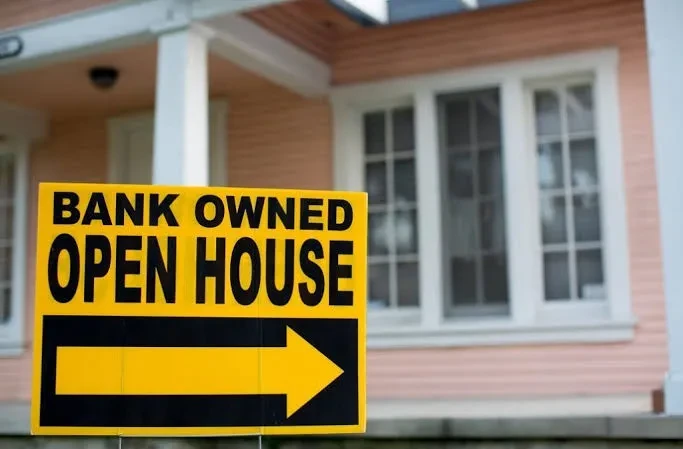 What Exactly Is a Bank-Owned Property?
A bank-owned property is a home that has completed the foreclosure process and is now owned by the lender—typically a bank, credit union, or mortgage servicer. When a homeowner defaults on their mortgage and the property fails to sell at auction, ownership reverts to the lender. At that point, the bank becomes the seller.
These properties are almost always sold as-is. That means the bank makes no repairs, offers no warranties, and expects the buyer to accept the property in its current condition. The upside is that banks are motivated to sell quickly to remove the asset from their books, which can translate into below-market pricing.
How Bank-Owned Properties Differ from Other Distressed Sales
It's helpful to distinguish REO properties from other types of distressed sales.
| Type | Owner | Process | Condition |
|---|---|---|---|
| Short sale | Homeowner (with lender approval) | Slower, requires lender negotiation | Often occupied, may be maintained |
| Foreclosure auction | Lender or third-party buyer | Competitive bidding, cash required | Varies; often sold without inspection |
| Bank-owned (REO) | Lender | Standard sale, but bank-controlled | Typically vacant, often neglected |
| Traditional sale | Homeowner | Familiar process | Usually maintained |
REO properties sit in a middle ground: they are less risky than auction purchases (you can usually inspect them), but they require more patience and due diligence than a typical resale.
Where to Find Bank-Owned Properties
Finding REO homes takes more effort than browsing standard listings. Here are the most effective channels:
Real estate agents who specialize in REO: Many agents work directly with banks to list and sell these properties. They often know about inventory before it hits public sites. Online foreclosure marketplaces: Sites like Zillow, Realtor.com, and Foreclosure.com allow you to filter for bank-owned properties. Some specialize exclusively in REO listings. Bank websites: Many large lenders maintain their own REO listing pages. These are often updated frequently. Government agencies: Fannie Mae, Freddie Mac, and HUD maintain searchable databases of their REO properties (HomePath, HomeSteps, and HUD Home Store, respectively). Local courthouse auctions: While most auctions don't result in REO purchases, attending them can give you insight into upcoming inventory.
The Financial Upside: Why Buyers Are Interested
Bank-owned properties can offer several financial advantages.
Below-market pricing: Banks are not emotionally attached to the property. Their goal is to recover as much of the outstanding loan balance as possible, not to maximize profit. This often results in prices 10–30% below comparable homes.
Clear title: When a bank takes ownership through foreclosure, it typically clears any junior liens, unpaid property taxes, and homeowner association dues. Buyers receive a clean title, which reduces legal risk.
Negotiation flexibility: While banks are less likely to budge on price than a private seller, they may cover some closing costs or offer credits for repairs in certain situations.
Potential for appreciation: If you buy in a recovering neighborhood, you may benefit from both immediate equity and long-term appreciation.
The Hidden Risks: What You Need to Know
The low price tag often reflects the condition of the property. Here's what to watch for.
Deferred maintenance: Many REO homes have been vacant for months or longer. Plumbing, electrical, HVAC, and roofing may have been neglected. Some may have been winterized, but others may have burst pipes or mold.
Unknown repair costs: Because banks sell as-is, you won't know the full extent of needed repairs until you conduct inspections. Budget for surprises.
Slow timelines: Bank bureaucracy can slow things down. Offers may take weeks to be reviewed. Closings can stretch to 60 days or more.
Occupancy issues: While most REO properties are vacant, some may still be occupied by former owners or tenants. Eviction, if necessary, can be time-consuming and legally complex.
Limited disclosure: Banks typically provide little to no information about the property's history. You won't get a seller's disclosure form like you would in a traditional sale.
Due Diligence: The Non-Negotiables
Before making an offer on a bank-owned property, protect yourself with these steps.
- Hire a licensed home inspector. This is not optional. An inspector will identify structural, mechanical, and safety issues.
- Get specialized inspections if needed. For suspected mold, asbestos, or sewer issues, bring in specialists.
- Review the title. Even though banks clear liens, confirm that the title is truly clean. A title company can verify.
- Check for permits and code violations. Unpermitted work can become your problem after closing.
- Estimate repair costs. Get bids from contractors for any major work. This will help you determine your maximum offer.
- Visit the property at different times. Check for neighborhood noise, traffic, and safety concerns.
Financing a Bank-Owned Property
Financing works much the same as a traditional purchase, with a few caveats.
Conventional loans: Most banks will accept conventional financing, but the property must meet lender condition standards (e.g., no missing appliances, no safety hazards). FHA and VA loans: These have stricter property condition requirements. A bank-owned property in poor condition may not qualify unless repairs are made before closing. Renovation loans: FHA 203(k) or Fannie Mae HomeStyle loans allow you to finance both the purchase and repairs in a single mortgage. This can be a smart option for REO homes needing work. Cash: Cash offers are most attractive to banks because they close quickly and avoid financing contingencies. If you can pay cash, you may have a competitive edge.
Get pre-approved before you make an offer. A pre-approval letter signals to the bank that you are a serious buyer and can speed up the process.
Negotiation Tactics That Work with Banks
Banks are not emotional sellers, so traditional negotiation strategies don't always apply.
Base your offer on data. Provide comparable sales, inspection findings, and repair estimates to justify your price. Ask for closing cost assistance. Banks may be more willing to cover some costs than to lower the price. Be patient but persistent. Follow up regularly, but don't bombard the asset manager. Consider a slightly higher offer with a faster closing. Banks value certainty and speed. A clean, quick deal can be more appealing than a higher offer with contingencies. Don't lowball. Banks have already written down the asset. An unrealistic offer may be ignored entirely.
Working with the Right Professionals
Buying a bank-owned property is not a DIY project. Build a team that includes:
A real estate agent experienced with REO transactions. A real estate attorney to review contracts and handle title issues. A home inspector who specializes in distressed properties. A contractor who can provide repair estimates and perform work after closing. A mortgage broker or lender familiar with renovation loans and REO financing.
Their expertise can save you money, time, and stress.
Common Mistakes to Avoid
Skipping the inspection. This is the most expensive mistake you can make. Underestimating repair costs. Always add a 20–30% contingency to your repair budget. Assuming the bank will fix problems. They won't. Ignoring the neighborhood. A cheap house in a declining area may not be a good investment. Failing to verify title. Even banks can miss liens or encumbrances. Rushing the process. Bank timelines are slow for a reason. Plan accordingly.
Is a Bank-Owned Property Right for You?
A bank-owned property can be an excellent opportunity if:
You are willing to put in work—either by hiring contractors or doing renovations yourself. You have a healthy budget for repairs and a contingency fund. You are patient and can handle a slower, less predictable process. You are looking for a primary residence or an investment property with upside potential.
It may not be right for you if:
You need to move in immediately. You are not comfortable with uncertainty. You have a limited budget for repairs. You want a turnkey home with no surprises.
Final Thoughts
Bank-owned properties offer a path to homeownership or investment at a discount, but they are not for the faint of heart. The savings come with trade-offs: as-is condition, slow timelines, and limited disclosure. By doing your homework, assembling a strong team, and budgeting conservatively, you can navigate the REO process successfully and potentially build equity from day one. If you're ready for the challenge, a bank-owned property might just be your next great opportunity.


