
'%20fill='%23fff'/%3e%3c/clipPath%3e%3c/defs%3e%3cg%20id='logo_s'%20transform='translate(3331%2011131)'%20clip-path='url(%23clip-path)'%3e%3ccircle%20id='椭圆_3510'%20data-name='椭圆%203510'%20cx='15'%20cy='15'%20r='15'%20transform='translate(-3330%20-11130)'%20fill='%23ffffff'%20opacity='0'/%3e%3cpath%20id='联合_790'%20data-name='联合%20790'%20d='M17,22.938H3.615a3.694,3.694,0,0,1-2.759-.895A3.625,3.625,0,0,1,0,19.454V3.489C.031,1.194,1.2.087,3.689.005H13.43L13.492,0V3.98a3,3,0,0,0,3,3h4.193V19.454c-.025,1.589-.662,3.485-3.554,3.485ZM5.8,16.588a.88.88,0,0,0,.879.879H14.1a.879.879,0,0,0,0-1.759H6.681A.88.88,0,0,0,5.8,16.588Zm0-3.836a.88.88,0,0,0,.879.879H14.1a.88.88,0,0,0,0-1.759H6.681A.881.881,0,0,0,5.8,12.752Zm0-3.837a.88.88,0,0,0,.879.879h4.783a.879.879,0,1,0,0-1.759H6.681A.88.88,0,0,0,5.8,8.915ZM17.031,5.5a2,2,0,0,1-2-2V.365a1.9,1.9,0,0,1,.3.235c.564.547,2.329,2.146,3.5,3.2l.068.061.886.8a2.8,2.8,0,0,1,.636.834Z'%20transform='translate(-3325.342%20-11126.47)'%20fill='%23ffffff'/%3e%3c/g%3e%3c/svg%3e)


 What a Facelift Actually Does
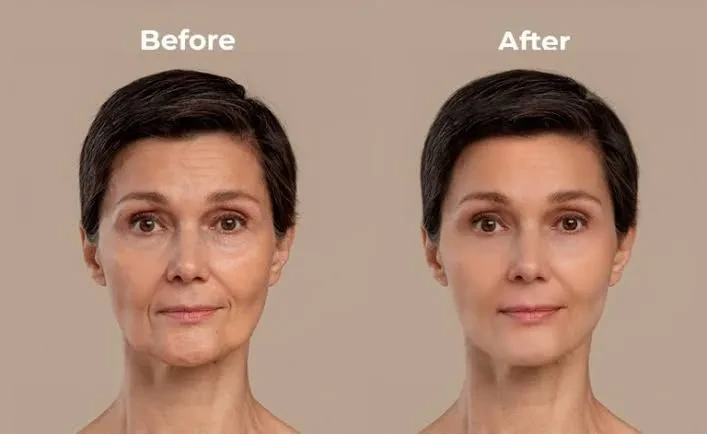 What a Facelift Actually Does
A common misconception is that a facelift simply pulls the skin tight. In reality, modern facelift surgery works on multiple layers—skin, fat, muscle, and connective tissue—to restore a more youthful facial contour. The goal is not to make someone look like a different person, but to reposition descended tissues and remove excess skin so the face looks refreshed and rested.
A facelift can improve: Sagging cheeks and midface Deep folds between the nose and mouth (nasolabial folds) Jowls along the jawline Loose skin and excess fat under the chin and neck Overall facial contour and definition
A facelift does not: Remove fine wrinkles or improve skin texture (resurfacing treatments are better for that) Change the fundamental shape of your face Stop the aging process—you will continue to age naturally
The most important anatomical structure in a modern facelift is the SMAS—the superficial musculoaponeurotic system. This fibrous layer connects the facial muscles to the skin. Repositioning the SMAS, rather than just pulling skin, is what produces natural, long-lasting results.
Types of Facelift Techniques
There is no single "best" facelift. The right technique depends on your anatomy, the degree of aging, your goals, and your tolerance for recovery time.
| Technique | Best For | Incisions | Recovery | Results Last |
|---|---|---|---|---|
| Mini Facelift | Mild sagging in jawline and lower face | Short, often hidden near ears | 3–7 days | 5–7 years |
| SMAS Facelift | Moderate sagging, jowls, early neck laxity | Longer, around ears and hairline | 7–14 days | 7–10 years |
| Deep Plane Facelift | Significant aging, midface volume loss, heavy jowls | Extended, but strategically placed | 2–3 weeks | 10+ years |
| Endoscopic Midface Lift | Early midface descent, cheek sagging | Small incisions in hairline | 5–10 days | 5–8 years |
| Neck Lift (often combined) | Loose neck skin, muscle banding | Incisions under chin and behind ears | 7–14 days | 7–10 years |
Mini Facelift: A less invasive option for patients in their 40s or early 50s who want subtle improvement without a lengthy recovery.
SMAS Facelift: The workhorse procedure. Lifts skin and the underlying muscle layer together for more durable results than skin-only techniques.
Deep Plane Facelift: Considered the most advanced approach. The surgeon releases retaining ligaments and lifts the skin and SMAS as one unit. This produces the most dramatic and longest-lasting results, but requires significant surgical expertise.
Endoscopic Midface Lift: Sometimes called a "ponytail lift." Uses a tiny camera and small incisions to elevate the cheeks. Best for younger patients with early midface aging.
Who Is a Good Candidate?
The ideal facelift candidate is someone who has begun to see sagging but still has reasonably good skin elasticity.
You may be a good candidate if you: Are in good overall health Do not smoke (or are willing to stop before and after surgery) Have realistic expectations Have moderate to significant laxity in the midface, lower face, or neck Are typically between 40 and 70, though age alone is not a disqualifier
You may not be a good candidate if you: Have a bleeding disorder or take blood-thinning medications that cannot be paused Have uncontrolled diabetes or other conditions that impair healing Have a history of poor scarring (keloids) Expect a facelift to remove all wrinkles or change your identity
The Procedure: Step by Step
Facelift surgery is usually performed under general anesthesia or IV sedation, often on an outpatient basis. The procedure takes 2 to 5 hours, depending on the technique.
What happens during surgery:
- Anesthesia – You are comfortably sedated or asleep.
- Incisions – Placed in natural creases in front of and behind the ear, and sometimes in the hairline.
- Tissue repositioning – The surgeon lifts the skin, tightens the SMAS, and repositions fat as needed.
- Excess skin removal – Only the redundant skin is trimmed away.
- Closure – Incisions are closed with sutures or staples.
- Dressings – A compressive bandage is applied to minimize swelling.
Drains may be placed to prevent fluid accumulation. They are usually removed within 1–2 days. Sutures come out in 7–10 days.
Recovery: What to Expect Week by Week
Recovery varies by technique and individual, but most patients follow a similar timeline.
Days 1–3: Swelling and bruising peak. Keep your head elevated, use cold compresses, and take prescribed pain medication as needed.
Week 1: Swelling begins to subside. Most patients feel comfortable going out in public with a scarf or hat. Sutures are typically removed at the end of this week.
Weeks 2–3: Bruising fades. Many people return to work and light social activities. Avoid strenuous exercise.
Weeks 4–6: Swelling continues to resolve. The face looks more natural. Light cardio can usually resume around week 3–4.
Months 3–6: Final results gradually emerge. Scars begin to fade. Some numbness may persist.
Months 6–12: Complete healing. The final, refined result is visible.
Risks and Complications
All surgery carries risk. Facelift complications are uncommon but include:
Hematoma – A collection of blood under the skin, which may require drainage Infection – Usually treatable with antibiotics Poor scarring – Can often be revised Nerve injury – Rare, but can cause temporary or permanent weakness Skin loss – Rare, more common in smokers Asymmetry – Minor differences are normal; significant asymmetry may require revision Numbness – Usually temporary, but can persist
Choosing a board-certified plastic surgeon with extensive facelift experience dramatically reduces these risks.
Cost of Facelift Surgery in 2026
Facelift costs vary widely by technique, surgeon, and location. The figures below represent typical surgeon fees and do not include anesthesia, facility fees, or post-op care.
| Procedure | Average Surgeon Fee (USD) |
|---|---|
| Mini Facelift | $5,000 – $15,000 |
| SMAS Facelift | $13,000 – $18,000 |
| Standard Facelift | $12,000 – $25,000 |
| Deep Plane Facelift | $18,000 – $40,000+ |
| Facelift + Neck Lift | $30,000 – $45,000 |
| Vertical Restore | $45,000 – $65,000 |
Note: These are estimates. Always request a comprehensive quote that includes anesthesia, facility fees, garments, and follow-up visits.
How to Choose a Facelift Surgeon
This is the most important decision you will make. Do not choose based on price alone.
Look for: Board certification in plastic surgery Extensive experience with the specific technique you want Before-and-after photos of real patients with similar anatomy Patient reviews that mention communication, bedside manner, and results A surgeon who listens and sets realistic expectations
Ask during consultation: How many facelifts do you perform each year? What technique do you recommend for me and why? What are the risks and how do you manage them? Can I see photos of patients who look like me? What is the total cost, including anesthesia and facility fees? What is your revision policy?
Nonsurgical Alternatives and Combination Approaches
A facelift is not the only option. Depending on your concerns, you may benefit from:
Dermal fillers – Restore volume to cheeks and lips Neuromodulators (Botox/Dysport) – Soften dynamic wrinkles Laser resurfacing – Improve skin texture and tone Thread lifts – Temporary lifting with dissolvable sutures Ultherapy / RF microneedling – Tighten skin without surgery
Many patients combine a facelift with these treatments for a more comprehensive rejuvenation. Your surgeon can advise on the best plan.
Conclusion
A facelift remains the most powerful tool for reversing significant facial aging. Modern techniques prioritize natural movement, long-lasting results, and safety. The key to a successful outcome is choosing a qualified surgeon, understanding the different techniques, and having realistic expectations. Recovery takes time, but for many patients, the result is a refreshed, confident appearance that lasts for years. If you are considering a facelift, schedule a consultation with a board-certified plastic surgeon to explore your options and develop a personalized plan.


