
'%20fill='%23fff'/%3e%3c/clipPath%3e%3c/defs%3e%3cg%20id='logo_s'%20transform='translate(3331%2011131)'%20clip-path='url(%23clip-path)'%3e%3ccircle%20id='椭圆_3510'%20data-name='椭圆%203510'%20cx='15'%20cy='15'%20r='15'%20transform='translate(-3330%20-11130)'%20fill='%23ffffff'%20opacity='0'/%3e%3cpath%20id='联合_790'%20data-name='联合%20790'%20d='M17,22.938H3.615a3.694,3.694,0,0,1-2.759-.895A3.625,3.625,0,0,1,0,19.454V3.489C.031,1.194,1.2.087,3.689.005H13.43L13.492,0V3.98a3,3,0,0,0,3,3h4.193V19.454c-.025,1.589-.662,3.485-3.554,3.485ZM5.8,16.588a.88.88,0,0,0,.879.879H14.1a.879.879,0,0,0,0-1.759H6.681A.88.88,0,0,0,5.8,16.588Zm0-3.836a.88.88,0,0,0,.879.879H14.1a.88.88,0,0,0,0-1.759H6.681A.881.881,0,0,0,5.8,12.752Zm0-3.837a.88.88,0,0,0,.879.879h4.783a.879.879,0,1,0,0-1.759H6.681A.88.88,0,0,0,5.8,8.915ZM17.031,5.5a2,2,0,0,1-2-2V.365a1.9,1.9,0,0,1,.3.235c.564.547,2.329,2.146,3.5,3.2l.068.061.886.8a2.8,2.8,0,0,1,.636.834Z'%20transform='translate(-3325.342%20-11126.47)'%20fill='%23ffffff'/%3e%3c/g%3e%3c/svg%3e)


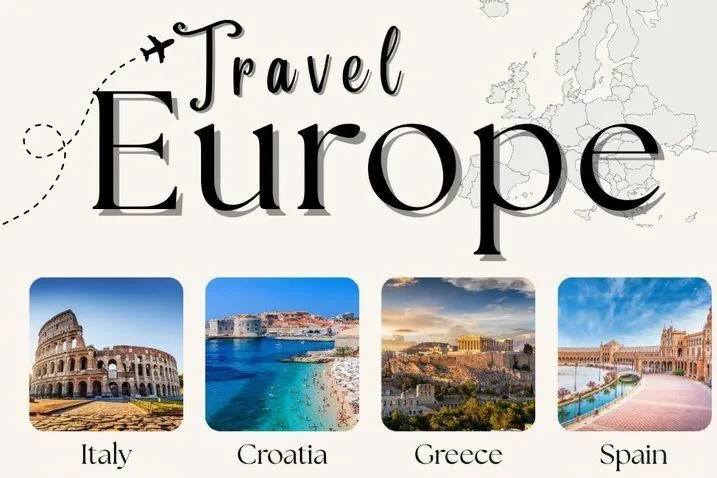 However, many travelers ask the same question before planning their trip: What is the best way to travel Europe? Because the continent includes dozens of countries located relatively close together, there are many travel options available.
This guide explains the best ways to travel Europe, including transportation choices, planning tips, and practical steps to make your trip smooth, affordable, and unforgettable.
Why Europe Is Perfect for Multi-Country Travel
One reason Europe is such a popular travel destination is the short distance between countries. In many cases, you can travel from one country to another within just a few hours.
For example:
- Paris to Brussels: about 1.5 hours by train
- Rome to Florence: about 1.5 hours by train
- Amsterdam to Berlin: about 6 hours by train
- Madrid to Barcelona: about 2.5 hours by high-speed train
Because of these short travel times, visitors often explore multiple countries during a single trip.
Step 1: Plan Your Travel Route
Before choosing transportation, the first step is deciding where you want to go.
Europe has over 40 countries, so it’s important to focus on a region rather than trying to see everything.
Popular European Travel Routes
Western Europe Route
- Paris, France
- Brussels, Belgium
- Amsterdam, Netherlands
Southern Europe Route
- Rome, Italy
- Florence, Italy
- Barcelona, Spain
Central Europe Route
- Prague, Czech Republic
- Vienna, Austria
- Budapest, Hungary
Choosing cities that are close together will save time and reduce travel costs.
Step 2: Traveling Europe by Train
For many travelers, train travel is the best way to travel Europe.
Europe has one of the most advanced railway systems in the world, connecting major cities quickly and comfortably.
Advantages of Train Travel
Train travel offers several benefits:
Convenient city-center stations
Unlike airports, train stations are usually located in the center of cities.
Fast travel times
High-speed trains can reach speeds over 300 km/h.
Scenic views
Travelers can enjoy beautiful countryside views during the journey.
Comfort
Trains offer spacious seating and the ability to move around during the trip.
The Eurail Pass
Many international visitors choose the Eurail Pass, which allows unlimited train travel across multiple European countries.
Benefits include:
- Flexible travel schedules
- Access to many train routes
- Cost savings for multi-city trips
The Eurail Pass is especially popular for travelers visiting several countries.
Step 3: Traveling Europe by Budget Airlines
Another efficient way to travel Europe is by budget airlines.
Low-cost carriers offer inexpensive flights between major European cities.
Popular European budget airlines include:
- Ryanair
- EasyJet
- Wizz Air
- Vueling
Flights between cities sometimes cost less than train tickets, especially when booked early.
Tips for Budget Flights
To get the best deals:
- Book flights several weeks in advance
- Travel with carry-on luggage only
- Check airport locations carefully (some are outside the city)
Budget airlines can save time when traveling longer distances.
Step 4: Traveling Europe by Car
Renting a car is another option, particularly if you want to explore rural areas and scenic routes.
Driving is ideal for visiting:
- The French countryside
- The Italian countryside
- The Swiss Alps
- Coastal towns in Portugal or Croatia
Benefits of Renting a Car
Driving provides:
- Flexible travel schedules
- Access to small towns and villages
- Scenic road trips
However, driving in large European cities can be difficult due to traffic, parking costs, and narrow streets.
For this reason, many travelers combine train travel for cities and car rental for countryside trips.
Step 5: Traveling Europe by Bus
Bus travel is often the most affordable way to travel Europe.
Companies such as FlixBus and BlaBlaBus operate routes connecting hundreds of cities across Europe.
Advantages of Bus Travel
Bus travel offers:
- Low ticket prices
- Extensive route networks
- Comfortable modern buses
Although buses may take longer than trains, they are an excellent option for travelers on a budget.
Step 6: Choosing the Best Travel Method
The best transportation method depends on your travel style, budget, and schedule.
Train Travel
Best for:
- Comfortable travel
- City-to-city trips
- Scenic journeys
Budget Flights
Best for:
- Long distances
- Saving time
- Visiting multiple countries quickly
Car Rental
Best for:
- Road trips
- Exploring countryside regions
- Flexible travel schedules
Bus Travel
Best for:
- Budget travelers
- Flexible itineraries
- Short-to-medium distance routes
Many experienced travelers combine several transportation methods during their trip.
Step 7: Plan Your Accommodation
Accommodation is another important part of planning your European trip.
Options include:
Hotels
Comfortable and widely available across Europe.
Hostels
Affordable and popular among younger travelers.
Vacation rentals
Platforms like Airbnb offer apartments and local living experiences.
Boutique hotels
These provide unique experiences in historic buildings or stylish locations.
Booking accommodation early can help secure better prices.
Step 8: Understand Visa and Travel Requirements
Travel requirements depend on your nationality.
Many travelers can visit Europe for short stays under the Schengen Area visa-free travel rules, typically allowing stays up to 90 days.
Always check:
- Passport validity
- Visa requirements
- Entry regulations
Proper preparation prevents travel disruptions.
Step 9: Budget for Your Trip
Travel costs in Europe vary depending on the destination.
Cities like Paris, London, and Zurich are generally more expensive, while destinations in Eastern Europe may be more affordable.
Typical travel expenses include:
- Transportation
- Accommodation
- Food
- Attractions and tours
Planning your budget in advance helps avoid unexpected costs.
Step 10: Travel Smart and Enjoy the Experience
The best way to travel Europe is not just about transportation—it’s about enjoying the experience.
Here are a few tips to make your trip memorable:
Travel Slowly
Instead of visiting too many cities, spend more time exploring each destination.
Experience Local Culture
Try local foods, visit markets, and interact with locals.
Pack Light
Carrying fewer bags makes train and city travel much easier.
Stay Flexible
Unexpected discoveries often become the best travel memories.
Final Thoughts
The best way to travel Europe depends on your personal travel style, budget, and destinations. Whether you choose trains, flights, buses, or road trips, Europe offers a well-connected transportation network that makes exploring the continent easier than ever.
By planning your route carefully, choosing the right transportation methods, and allowing time to experience local culture, you can create an unforgettable European adventure.
With stunning cities, diverse cultures, historic landmarks, and beautiful landscapes, Europe remains one of the most rewarding travel destinations in the world. Whether it’s your first visit or your tenth, there is always something new to discover.


