
'%20fill='%23fff'/%3e%3c/clipPath%3e%3c/defs%3e%3cg%20id='logo_s'%20transform='translate(3331%2011131)'%20clip-path='url(%23clip-path)'%3e%3ccircle%20id='椭圆_3510'%20data-name='椭圆%203510'%20cx='15'%20cy='15'%20r='15'%20transform='translate(-3330%20-11130)'%20fill='%23ffffff'%20opacity='0'/%3e%3cpath%20id='联合_790'%20data-name='联合%20790'%20d='M17,22.938H3.615a3.694,3.694,0,0,1-2.759-.895A3.625,3.625,0,0,1,0,19.454V3.489C.031,1.194,1.2.087,3.689.005H13.43L13.492,0V3.98a3,3,0,0,0,3,3h4.193V19.454c-.025,1.589-.662,3.485-3.554,3.485ZM5.8,16.588a.88.88,0,0,0,.879.879H14.1a.879.879,0,0,0,0-1.759H6.681A.88.88,0,0,0,5.8,16.588Zm0-3.836a.88.88,0,0,0,.879.879H14.1a.88.88,0,0,0,0-1.759H6.681A.881.881,0,0,0,5.8,12.752Zm0-3.837a.88.88,0,0,0,.879.879h4.783a.879.879,0,1,0,0-1.759H6.681A.88.88,0,0,0,5.8,8.915ZM17.031,5.5a2,2,0,0,1-2-2V.365a1.9,1.9,0,0,1,.3.235c.564.547,2.329,2.146,3.5,3.2l.068.061.886.8a2.8,2.8,0,0,1,.636.834Z'%20transform='translate(-3325.342%20-11126.47)'%20fill='%23ffffff'/%3e%3c/g%3e%3c/svg%3e)


 The Modern Hair Transplant Landscape: A Revolution in Restoration
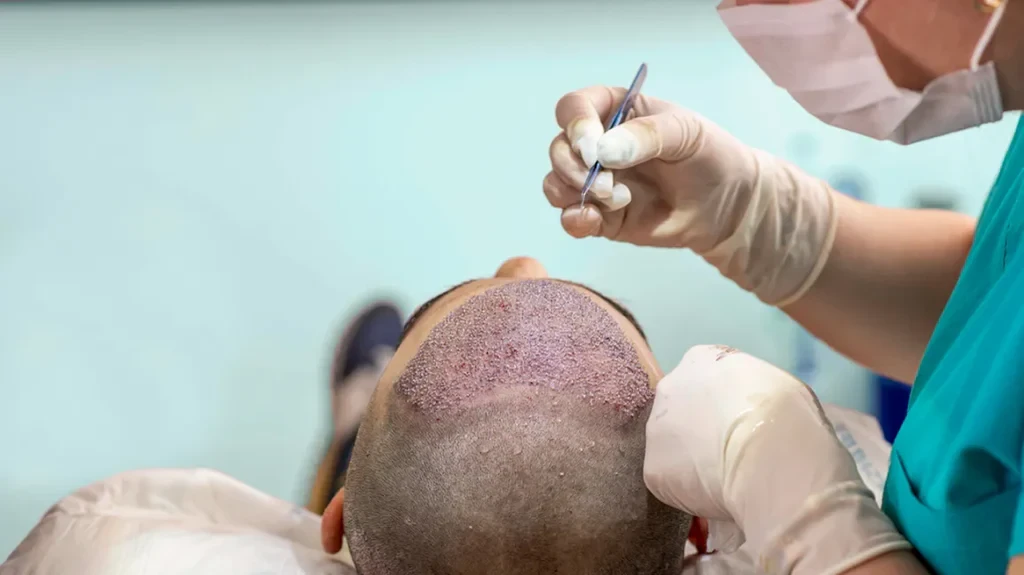 The Modern Hair Transplant Landscape: A Revolution in Restoration
Hair transplantation has undergone a quiet revolution. What began as a crude procedure involving large plugs has evolved into a microsurgical art form that demands both technical precision and aesthetic vision.
The Science of Permanent Hair
The foundation of all hair transplantation lies in a biological truth discovered decades ago: the hair at the back and sides of your scalp (the “donor area”) is genetically programmed to resist the hormones that cause male and female pattern baldness. This area, sometimes called the “permanent zone,” remains robust even as the crown and hairline thin. Transplanting these resilient follicles to balding areas allows them to continue growing for a lifetime in their new location. This is the donor dominance theory—the principle that makes all hair restoration possible.
More Than Vanity: The Psychological Dimension
Hair loss is not merely a cosmetic concern. Research increasingly acknowledges the significant psychological impact of alopecia, affecting self-esteem, social confidence, and quality of life. For many, pursuing transplantation is about reclaiming a sense of self—looking in the mirror and seeing the person they feel themselves to be. A successful transplant can be transformative, not just in appearance but in how one moves through the world.
A Patient’s Perspective:
“I started losing my hair in my early twenties. By thirty, I was constantly aware of it—angling my head differently in photos, wearing hats whenever possible, feeling older than I was. I researched transplants for years before finally committing. The procedure itself was easier than I expected, but the waiting for results tested my patience. When the new hair finally grew in, it wasn’t just about having more hair. It was about feeling like myself again. I wish I’d done it sooner.” – Michael, 42, engineer
Demystifying the Techniques: Understanding Your Options
Modern hair transplantation centers on two primary techniques, each with distinct approaches, advantages, and considerations.
Follicular Unit Transplantation (FUT): The Strip Method
The Technique: A strip of skin, typically less than 2 centimeters wide, is surgically removed from the donor area (usually the back of the scalp). This strip is then carefully dissected under a microscope by trained technicians into individual follicular units—the naturally occurring groups of 1-4 hairs that grow together. The donor site is closed with specialized suturing techniques, such as the trichophytic closure, which allows hair to grow through the scar, making it less visible.
The Advantages: FUT allows for the harvesting of a large number of grafts in a single session. Because the follicles are dissected under magnification, there is minimal damage to the delicate structures. The technique has a long track record of success and can be more cost-effective for large sessions.
The Considerations: FUT leaves a linear scar at the donor site. While modern closure techniques make this scar very fine and easily concealed by hair even at shorter lengths, it is a permanent consideration. Patients who prefer to wear their hair very short (e.g., a #1 or #2 buzz cut) may find the scar visible.
Follicular Unit Extraction (FUE): The Individual Harvest Method
The Technique: Instead of removing a strip, the surgeon uses a tiny circular punch (typically 0.7-1.0 mm in diameter) to extract individual follicular units directly from the donor area. These small extraction sites heal on their own without sutures, leaving tiny, dot-like scars that are virtually undetectable even with short hair.
The Advantages: FUE eliminates the linear scar, offering greater flexibility in hairstyle length. Recovery from the donor area is often faster, with less tightness or discomfort. Many patients find the idea of individual extractions less intimidating than a strip removal. The technique also allows for harvesting from areas beyond the traditional donor zone in some cases.
The Considerations: FUE is more time-consuming and labor-intensive, which can increase the cost. There is a theoretical risk of transecting (cutting) follicles during extraction, though skilled surgeons minimize this. The donor area is shaved for the procedure, which may be a consideration for those who cannot easily conceal it during the healing phase. (Note: Some variations like “long hair FUE” exist, allowing extraction without shaving, but this is a specialized technique).
Beyond the Techniques: The Art of Hairline Design
Regardless of the harvesting method, the true artistry of hair transplantation lies in the design. A natural hairline is not a straight line but an irregular, feathered border with micro-irregularities that mimic nature. The surgeon must consider:
Facial proportions and features: The hairline must complement the patient’s face
Age and future hair loss patterns: Designing for today without considering tomorrow can lead to an unnatural look as native hair continues to thin
Hair characteristics: Color, texture, caliber, and wave all influence how the final result will appear. Generally, thick hair that is light-colored or grey yields better cosmetic results than thin, dark hair
Direction and angle: Each follicle must be placed at the precise angle and direction of natural growth to achieve an undetectable result
The Hair Transplant Journey: What to Expect
Phase One: The Consultation and Planning (Months Before Surgery)
Your journey begins not in the operating room, but in a consultation room with a qualified surgeon. This critical step involves:
Medical evaluation: Assessment of your hair loss pattern, donor hair quality and density, and overall health
Discussion of goals: What do you hope to achieve? What is realistic given your hair characteristics and loss pattern?
Hairline design: The surgeon will work with you to design a hairline that suits your face and age
Graft calculation: The number of grafts needed is estimated based on the area to be covered and desired density
Review of risks and alternatives: An honest discussion of potential complications and non-surgical options
Phase Two: The Procedure (4-8 Hours)
On the day of surgery, you can expect:
Preparation: The donor area is trimmed, and both donor and recipient sites are numbed with local anesthesia. You will be awake but comfortable throughout.
Harvesting: Depending on the technique, the surgeon either removes a strip (FUT) or begins extracting individual follicles (FUE).
Graft preparation: While the surgeon works, a team of trained technicians meticulously dissects and prepares the grafts under microscopes, ensuring their viability.
Recipient site creation: The surgeon creates tiny recipient sites (slits or holes) in the balding area, following the precise angles and directions of natural hair growth.
Graft placement: The prepared follicles are carefully placed into these sites, one by one, using specialized forceps or implantation devices like the “implanter pen.” The number of grafts can range from 1,000 to 4,000 or more in a single session, depending on the extent of hair loss.
The entire procedure is meticulous and time-intensive. An experienced team can typically complete 1,000-2,000 grafts in 3-4 hours. Afterward, the scalp is gently cleaned and bandaged.
Phase Three: The Recovery and Growth Timeline
Patience is the single most important virtue after a hair transplant. The timeline unfolds in predictable stages:
Days 1-3: The Immediate Post-Op Period
Small scabs form around the transplanted grafts
The recipient area may appear red and slightly swollen
Some patients experience mild swelling that may migrate to the forehead or around the eyes
Pain is generally minimal and managed with over-the-counter medicationDays 4-10: The First Healing
Scabs begin to fall off on their own—do not pick at them
You can typically resume gentle washing as directed by your surgeon
The donor area (especially with FUT) may feel tight or slightly soreWeeks 2-4: The Shedding Phase
The transplanted hairs will fall out. This is normal and expected. The hair shaft sheds, but the follicle itself remains safely embedded in the scalp, preparing to grow new hair.
Some patients experience shock loss—temporary thinning of existing hair near the transplant siteMonths 3-4: The First Signs of Growth
New hairs begin to emerge—fine, soft, and perhaps lighter in color at first
Growth is gradual and may be uneven initiallyMonths 6-9: Noticeable Improvement
Hair continues to thicken and darken
The cosmetic effect becomes increasingly apparentMonths 12-18: The Final Result
The full density and character of the transplant are evident
Hair can be styled, cut, and treated like your natural hair (once fully healed)The Core Strategic Choice: FUT, FUE, or Non-Surgical Alternatives?
Your decision rests on several factors, including your hair loss pattern, donor characteristics, lifestyle, and budget.
Choosing FUT (Strip Harvesting)
- Best For: Patients needing a large number of grafts in a single session, those who keep their hair at a length that conceals the linear scar, and those seeking a cost-effective approach for extensive coverage.
- The Trade-Off: A permanent linear scar that requires sufficient hair length to conceal.
Choosing FUE (Individual Extraction)
- Best For: Patients who prefer to wear their hair very short, those with smaller areas to cover, and individuals concerned about the linear scar.
- The Trade-Off: Higher cost per graft and a longer procedure time for large sessions.
The Non-Surgical Path
For some, transplantation may not be the right first step. Alternatives include:
- Medical therapy: Finasteride (oral medication) can slow or halt the progression of male pattern baldness. Minoxidil (topical or oral) can stimulate growth in some individuals.
- Low-level laser therapy: Devices that claim to stimulate hair follicles.
- Cosmetic solutions: Wigs, hairpieces, hair fibers, and scalp micropigmentation (tattooing) offer non-surgical options.
- Acceptance: For some, coming to terms with hair loss as a natural part of aging is the most empowering choice.
Your Action Plan: From Consideration to New Growth
Why Choosing Your Surgeon is the Most Important Decision
The success of your hair transplant hinges more on the skill of your surgeon than any other factor. Hair restoration is not merely a technical procedure; it is an artistic endeavor requiring years of training and experience. The best results come from surgeons who understand not only how to move follicles, but how to design a hairline that frames the face naturally and will age gracefully.
The Step-by-Step Protocol for a Successful Hair Transplant
Conduct Honest Self-Assessment
What bothers you most about your hair loss?
What are your realistic expectations? (A transplant can restore density, but it won’t give you the hair of your 18-year-old self)
Are you prepared for the financial investment and the patience required for results?
Have you tried or considered medical therapies to stabilize ongoing loss?Research Surgeons Thoroughly
Seek surgeons who specialize exclusively in hair restoration
Look for board certification in dermatology or plastic surgery with additional fellowship training in hair restoration
Review extensive before-and-after photos of patients with similar hair characteristics to yours
Read independent reviews from verified patients
Be wary of heavily marketed “brand name” techniques—the surgeon’s skill matters more than the equipmentAttend Multiple Consultations
Meet with at least two or three qualified surgeons
Come prepared with questions:
“How many grafts do you estimate I need, and why?”
“What is your recommendation for FUT vs. FUE in my case?”
“Can I see examples of your work on patients with similar hair?”
“What is your complication rate, and how do you handle them?”
“What is the total cost, and what does it include?”
Pay attention to how thoroughly the surgeon examines your scalp and discusses your goalsUnderstand the Full Financial Picture
Hair transplantation is typically priced per graft. In the U.S., costs can range from $4 to $10 or more per graft, depending on technique and surgeon expertise. Total costs often range from $4,000 to $15,000 or higher for extensive sessions.
Ensure you understand what is included: the procedure itself, any follow-up visits, medications, and post-operative care
Be wary of prices that seem too good to be true—expertise is worth the investmentPrepare for the Procedure and Recovery
Follow all pre-operative instructions, which may include avoiding certain medications (like blood thinners, aspirin, ibuprofen) and supplements (like fish oil, vitamin E)
Arrange for someone to drive you home after the procedure
Prepare your home with easy-to-prepare meals, soft pillows (you may need to sleep elevated), and entertainment for a few days of quiet recovery
Clear your schedule for at least a week—most patients take 7-10 days off workNavigate the Post-Operative Period with Patience
Follow your surgeon’s aftercare instructions to the letter
Be gentle with your scalp during washing and handling
Avoid strenuous exercise, alcohol, and smoking for the recommended period
Protect your scalp from sun exposure for months after the procedure
Document your progress with photos—it helps to see the gradual change when patience wears thinPlan for the Long Term
Understand that hair loss may continue in areas not treated. Many patients benefit from ongoing medical therapy (finasteride, minoxidil) to protect both transplanted and native hair.
Schedule regular follow-ups with your surgeon to assess results and discuss any additional sessions if desired
Be realistic—multiple sessions may be needed to achieve desired density, especially for advanced hair lossPotential Complications and Risk Management
While serious complications are rare in the hands of experienced providers, all surgery carries some risk. Common and expected temporary effects include:
Swelling and bruising: Particularly around the forehead and eyes, usually resolving within a few days
Numbness: Temporary loss of sensation in donor or recipient areas, which typically resolves over months
Crusting and scabbing: Normal part of healing
Itching: As the scalp heals
Less common but possible complications include:
Infection (up to 11% in some studies, though typically minor and treatable)
Bleeding
Poor growth or failure of some grafts to thrive
Cysts or folliculitis (inflammation of follicles)
Scarring, including hypertrophic scars or keloids (more common with FUT, affecting up to 15% in some series)
Unnatural appearance if hairline design is poor
Continued hair loss behind the transplant, creating an unnatural pattern if not planned forA comprehensive discussion of risks with your surgeon is essential before proceeding.
Conclusion: The Journey to a Fuller Head of Hair
A hair transplant is not a quick fix—it is a journey that demands patience, realistic expectations, and a partnership with a skilled and ethical surgeon. The procedure itself is one day; the waiting and watching for results unfolds over a year. But for those who choose wisely and commit to the process, the reward is not just more hair, but the restoration of a reflection that feels true.
The technology and techniques have never been better. Modern hair restoration, when performed by experts, yields results that are undetectable, natural, and designed to last. The “pluggy” transplants of the past are just that—the past. Today’s procedures honor the natural patterns of hair growth, creating density and hairlines that fool even trained eyes.
If you are considering this path, arm yourself with knowledge. Research exhaustively. Consult widely. Choose not on price, but on expertise and artistry. Understand that this is a partnership—your commitment to aftercare and long-term maintenance matters as much as the surgeon’s skill.
When, a year from now, you run your hand through hair that is fuller, or catch your reflection without a second thought, you’ll understand. The journey wasn’t just about follicles and grafts. It was about reclaiming a piece of yourself, and the confidence to face the world as you feel yourself to be.


