
'%20fill='%23fff'/%3e%3c/clipPath%3e%3c/defs%3e%3cg%20id='logo_s'%20transform='translate(3331%2011131)'%20clip-path='url(%23clip-path)'%3e%3ccircle%20id='椭圆_3510'%20data-name='椭圆%203510'%20cx='15'%20cy='15'%20r='15'%20transform='translate(-3330%20-11130)'%20fill='%23ffffff'%20opacity='0'/%3e%3cpath%20id='联合_790'%20data-name='联合%20790'%20d='M17,22.938H3.615a3.694,3.694,0,0,1-2.759-.895A3.625,3.625,0,0,1,0,19.454V3.489C.031,1.194,1.2.087,3.689.005H13.43L13.492,0V3.98a3,3,0,0,0,3,3h4.193V19.454c-.025,1.589-.662,3.485-3.554,3.485ZM5.8,16.588a.88.88,0,0,0,.879.879H14.1a.879.879,0,0,0,0-1.759H6.681A.88.88,0,0,0,5.8,16.588Zm0-3.836a.88.88,0,0,0,.879.879H14.1a.88.88,0,0,0,0-1.759H6.681A.881.881,0,0,0,5.8,12.752Zm0-3.837a.88.88,0,0,0,.879.879h4.783a.879.879,0,1,0,0-1.759H6.681A.88.88,0,0,0,5.8,8.915ZM17.031,5.5a2,2,0,0,1-2-2V.365a1.9,1.9,0,0,1,.3.235c.564.547,2.329,2.146,3.5,3.2l.068.061.886.8a2.8,2.8,0,0,1,.636.834Z'%20transform='translate(-3325.342%20-11126.47)'%20fill='%23ffffff'/%3e%3c/g%3e%3c/svg%3e)


 The Modern Landscape: Why Sperm Donation Matters More Than Ever
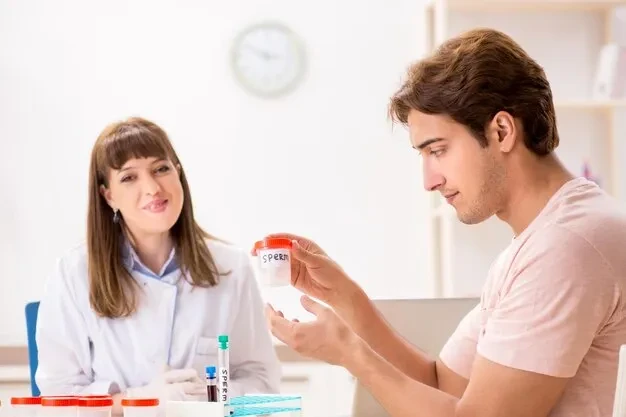 The Modern Landscape: Why Sperm Donation Matters More Than Ever
The world of family building has transformed dramatically over the past generation. Sperm donation has moved from the shadows of secrecy into the light of open, medically assisted reproduction, playing an increasingly vital role in helping individuals and couples achieve their dreams of parenthood.
The Growing Need for Donors
The demand for donor sperm in the United States has never been higher. A wide range of individuals and couples rely on donor sperm to build their families:
Heterosexual couples facing male infertility: Male factor infertility accounts for approximately one-third of all infertility cases. For many couples, donor sperm offers the only path to a biological child for one partner.
Same-sex female couples: For lesbian couples, donor sperm is an essential component of family building, allowing one partner to carry a child conceived with the other’s egg or with a donor egg.
Single women by choice: An increasing number of women are choosing to become parents on their own, turning to sperm donation as their pathway to motherhood.
Individuals with genetic disorders: Those carrying heritable genetic conditions may choose donor sperm to prevent passing those conditions to their children.
According to the American Society for Reproductive Medicine, an estimated 30,000 to 60,000 children are born annually in the United States through donor insemination, representing a significant and growing segment of American families.
The Evolution of Donor Identity
Perhaps the most significant shift in sperm donation has been the move away from strict anonymity. Historically, donors were promised lifelong anonymity, and their identities were sealed permanently. Today, the landscape is far more nuanced:
Anonymous donation: Still available in some contexts, but declining in popularity as recipients and donor-conceived individuals increasingly advocate for transparency.
Open-identity donation: The most common model in contemporary practice. Donors agree that their identity can be released to donor-conceived offspring when they reach the age of majority (typically 18). The donor has no contact with the family during the child’s upbringing but agrees to be known when the child seeks that information.
Known donation: A donor who is personally known to the recipient family—often a friend or family member—participates in the conception with full knowledge and ongoing relationship, though legal agreements are still essential to establish parental rights and responsibilities.
The Regulatory Framework
Sperm donation in the United States is regulated primarily by the Food and Drug Administration (FDA) and industry organizations like the American Society for Reproductive Medicine (ASRM) and the Society for Assisted Reproductive Technology (SART) . Key requirements include:
FDA regulations governing donor screening, testing, and record-keeping to prevent the transmission of infectious diseases
Mandatory testing for genetic disorders and infectious diseases
Strict limits on the number of pregnancies from a single donor to prevent accidental consanguinity (typically 25-30 families per donor in the US, though limits vary)
Comprehensive psychological screening to assess donor motivation and stabilityA Donor’s Perspective:
“I started donating during graduate school when money was tight. The compensation helped, but honestly, it became so much more than that. The clinic showed me photos of babies born from my donations, and I realized I was helping create families. Years later, I got a letter through the clinic from a young woman who wanted to thank her donor. She didn’t want a relationship—just wanted me to know she was happy and healthy and grateful. That letter is one of my most treasured possessions.” – Michael, 38, donated during his twenties
Demystifying the Process: What Donors Need to Know
Becoming a sperm donor is not as simple as walking into a clinic and making a deposit. It is a rigorous, months-long process designed to ensure the health of future children and the safety of all parties involved.
The Donor Qualification Journey
Initial Screening: The First Hurdle
The vast majority of potential donors are screened out during the initial application. Sperm banks typically seek donors who meet specific criteria:Age: Most banks accept donors between 18 and 39, with the sweet spot being early to mid-twenties when sperm quality is at its peak.
Education: Many banks prefer donors who are currently enrolled in or have completed college, as recipient families often seek donors with higher education backgrounds. Some banks even specialize in “Ivy League donors” from prestigious universities.
Height and physical characteristics: While controversial, many recipient families have preferences regarding physical traits. Banks often collect detailed information on height, weight, eye color, hair color, ethnicity, and build.
Health history: Donors must have no personal or family history of significant genetic disorders, mental illness, or chronic diseases.
The Medical and Genetic Testing Gauntlet
Candidates who pass the initial screening undergo extensive testing:Semen analysis: Multiple samples are analyzed for count, motility, and morphology. Only donors with consistently excellent sperm quality proceed.
Genetic screening: Donors are tested for hundreds of genetic disorders, including cystic fibrosis, Tay-Sachs disease, sickle cell anemia, and others. The specific panel depends on the donor’s ethnic background.
Infectious disease testing: Comprehensive screening for HIV, hepatitis B and C, syphilis, gonorrhea, chlamydia, and other sexually transmitted infections.
Physical examination: A full medical exam to assess overall health and identify any potential issues.
The Psychological Evaluation
Perhaps the most critical component of donor qualification is the psychological assessment. A licensed mental health professional meets with the donor to explore:Motivation for donating
Understanding of the implications for future children
Feelings about potential contact from offspring
Emotional stability and maturity
Ability to handle the complex emotions that may ariseThis evaluation is not designed to be passed or failed, but to ensure that donors are entering the process with eyes wide open.
The Donation Process: What Actually Happens
At the Clinic
Once qualified, donors visit the clinic regularly—typically once or twice weekly—to provide samples. The process is clinical and private:Donors are provided a private room with appropriate materials
Samples are collected via masturbation
The sample is immediately labeled with a unique donor code to ensure anonymity
Each sample undergoes quality testing before being frozen and quarantinedThe Quarantine Period
FDA regulations require that sperm be quarantined for a minimum of six months. Donors must be retested for infectious diseases after the quarantine period before any samples can be released for use. This ensures that any infections contracted during the donation period are detected before the sperm is used.Compensation
Donors are typically compensated for their time and effort. Payment varies by bank and location but generally ranges from $50 to $150 per sample. Some donors earn several thousand dollars annually if they donate regularly. However, it’s important to understand that compensation is for time and inconvenience, not for the sperm itself, and donors must continue to meet rigorous quality standards to remain in the program.
The Long-Term Implications
Anonymity and Contact
The days of guaranteed lifetime anonymity are largely over. Most U.S. sperm banks now operate on an open-identity model, meaning that when donor-conceived children reach age 18, they can request identifying information about their donor. Some banks offer donors the option to provide ongoing medical updates or even to be contacted directly by offspring.Donors should enter the process assuming that at some point, they may be contacted by biological children. This can be a beautiful experience for some and deeply unsettling for others. Honest self-reflection about this possibility is essential.
Legal Rights and Responsibilities
Sperm donors who donate through a licensed clinic following FDA regulations typically have no legal rights or responsibilities regarding any children conceived from their donations. They are not considered legal parents and have no obligation for child support. However, this protection depends entirely on proper legal channels—private arrangements outside of clinics can create legal complications.Limits on Donations
To prevent accidental consanguinity (half-siblings unknowingly having children together), U.S. sperm banks limit the number of families that can use a single donor. The typical limit is 25-30 families per donor, though this varies. This means your genetic material may create dozens of biological offspring spread across the country.A Recipient’s Perspective:
“My wife and I spent months researching donors. We didn’t just want healthy sperm—we wanted to know something about the person who would be half of our child’s genetic makeup. The donor profiles gave us a sense of who he was: his interests, his values, why he donated. We chose someone who wrote beautifully about wanting to help families like ours. Our son is three now, and someday we’ll tell him about the generous person who made his life possible. We’re forever grateful.” – Sarah, mother via donor conception
The Core Decision: Known Donor, Anonymous Donor, or Open-Identity Donor?
This is the most fundamental choice in the sperm donation landscape, affecting donors, recipients, and most importantly, future children.
Choosing Open-Identity Donation
The Modern Standard: Most donors today choose open-identity donation, where their identity remains confidential until the child reaches age 18.
Why Choose This Path:
You’re comfortable with the possibility of future contact, but not with ongoing involvement during childhood
You believe donor-conceived children have a right to know their genetic origins
Most recipient families strongly prefer open-identity donors
You want to provide medical updates that could benefit offspringThe Trade-Off: You must be prepared for the possibility that one day, perhaps decades from now, a young adult will reach out wanting to know you. You have no obligation to form a relationship, but you cannot prevent contact once the child reaches adulthood.
Choosing Anonymous Donation
The Traditional Model: A diminishing but still available option where your identity is permanently sealed.
Why Choose This Path:
You want absolute certainty that you will never be contacted
You’re uncomfortable with the idea of biological children you’ll never raise
You have personal or family circumstances that require complete anonymityThe Trade-Off: Anonymous donors are in lower demand as recipient families increasingly seek open-identity options. You must also consider the ethical dimension—many donor-conceived adults advocate strongly against anonymity, arguing that they have a right to know their genetic heritage.
Choosing Known Donation
The Personal Connection: A donor who is personally known to the recipient family, often a friend or relative.
Why Choose This Path:
You want an ongoing relationship with the child you help create
You’re helping someone you personally care about build their family
You want your child (if you later have your own) to know their half-siblings
You’re comfortable with complex family dynamics and clear legal agreementsThe Trade-Off: Known donation requires extensive legal work to establish parental rights and responsibilities. Without proper legal agreements, a known donor could potentially be held liable for child support or could assert parental rights, creating legal chaos. Any known donation should involve independent legal counsel for all parties.
The Donor’s Action Plan: From Consideration to Commitment
Why Self-Reflection is Your Most Important First Step
Before contacting a single clinic, spend time with yourself and, if appropriate, with trusted loved ones. Ask the hard questions:
Why do I want to do this?
How would I feel if a child I helped create contacted me in 20 years?
How would my spouse or partner feel about this?
Would I tell my own future children about their half-siblings?
Am I emotionally stable enough to handle the complex feelings that may arise?The Step-by-Step Protocol for Potential Donors
Research Sperm Banks Thoroughly
Identify banks with strong reputations and ethical practices
Compare compensation rates, but don’t make this your only criteria
Read reviews from other donors about their experiences
Understand each bank’s policies on anonymity, contact, and limitsComplete the Initial Application
Be honest and thorough in your application
Provide detailed family medical history—omissions can be disqualifying
Expect to answer personal questions about your background, education, and motivationUndergo the Screening Process with Patience
The process typically takes 3-6 months from initial application to active donation
Be prepared for multiple blood draws, semen analyses, and psychological interviews
Understand that most applicants are rejected—this is not a reflection of your worthIf Accepted, Commit to Consistency
Donation requires regular clinic visits, often weekly
Maintain healthy habits: no smoking, limited alcohol, good sleep, healthy diet
Avoid behaviors that could introduce infectious diseases
Be honest about any changes in your health or risk factorsPrepare for the Long-Term Emotional Journey
Keep a journal during your donation period
Consider writing a letter to future offspring (many banks offer this option)
Stay open to contact if you’ve chosen open-identity donation
Update the bank with any significant medical information that could affect offspringUnderstand Your Compensation and Taxes
Keep records of all payments received
Consult a tax professional about reporting requirements
Remember that compensation is for time and inconvenience, not for the sperm itselfImportant Considerations for Donors
Health Insurance Implications: Some donors worry that using donor sperm could affect their own health insurance coverage. Generally, it does not. However, if you later need fertility treatment yourself, your history as a donor is typically not relevant.
Travel and Geographic Limitations: Most donors must live within reasonable distance of a sperm bank’s collection facility. If you move, you may need to transfer to another bank or end your donation period.
The End of Your Donation Period: Donors typically remain active for 6-24 months, after which their samples are frozen and stored. You may be asked to provide periodic health updates for the life of your stored samples.
A Medical Professional’s Perspective:
“I’ve counseled hundreds of potential donors over my career. The ones who succeed—and by succeed I mean they feel good about their decision years later—are the ones who went into it with their eyes open. They understood that they weren’t just providing biological material; they were helping create human beings who would one day have questions, feelings, and maybe a desire to connect. If you can hold that truth with maturity and compassion, donation can be one of the most meaningful things you ever do.” – Dr. Rebecca Chen, reproductive psychologist
Recipient Considerations: Understanding the Other Side
While this guide focuses primarily on donors, understanding the recipient perspective is essential for anyone considering donation.
What Recipients Look For in a Donor
Health and genetic history: Clean bill of health, no significant family history of genetic disorders
Physical characteristics: Matching desired traits (height, eye color, hair color, ethnicity)
Education and interests: Many recipients value donors with higher education or interesting backgrounds
Personal statement: A well-written donor essay can be the deciding factor for recipients choosing between otherwise similar donors
Open-identity status: Most modern recipients strongly prefer donors willing to be known when children come of age
The Recipient’s Journey
For recipients, choosing a donor is an intensely personal process—often more emotionally charged than donors might imagine. They are selecting half of their future child’s genetic makeup from a catalog of strangers. The donor’s profile, photographs (sometimes baby photos only), and personal statement become treasured documents.
Conclusion: The Gift That Keeps Giving
Becoming a sperm donor is an act of profound generosity—one that ripples outward in ways you may never fully comprehend. The families you help create will celebrate birthdays, navigate school years, and build lives because you chose to give. The children born from your donation will carry your genetic legacy into futures you cannot imagine.
But this gift comes with weight. It requires honesty with yourself about your motivations, your emotional capacity, and your willingness to be known—perhaps decades from now—by people who owe their very existence to your decision. It requires navigating medical procedures, legal frameworks, and ethical considerations with maturity and care.
For those who enter this path thoughtfully, the rewards can be extraordinary. Not the financial compensation, though that helps. Not the medical screenings, though they provide useful health information. The real reward is knowing, deep in your bones, that you made family possible for people who desperately wanted one. That you gave the gift of life in its most fundamental form.
Approach this decision with the gravity it deserves. Talk to trusted people in your life. Consult with professionals. Imagine yourself years from now, perhaps receiving a letter from a young adult who wants to thank you. Imagine how that would feel. If the answer brings a sense of peace, of purpose, of quiet pride—then this path may be right for you.
The families waiting for donors like you are out there, their dreams held in suspended animation, hoping for someone generous enough to help them come true. Your decision could be the answer to their prayers.


