
'%20fill='%23fff'/%3e%3c/clipPath%3e%3c/defs%3e%3cg%20id='logo_s'%20transform='translate(3331%2011131)'%20clip-path='url(%23clip-path)'%3e%3ccircle%20id='椭圆_3510'%20data-name='椭圆%203510'%20cx='15'%20cy='15'%20r='15'%20transform='translate(-3330%20-11130)'%20fill='%23ffffff'%20opacity='0'/%3e%3cpath%20id='联合_790'%20data-name='联合%20790'%20d='M17,22.938H3.615a3.694,3.694,0,0,1-2.759-.895A3.625,3.625,0,0,1,0,19.454V3.489C.031,1.194,1.2.087,3.689.005H13.43L13.492,0V3.98a3,3,0,0,0,3,3h4.193V19.454c-.025,1.589-.662,3.485-3.554,3.485ZM5.8,16.588a.88.88,0,0,0,.879.879H14.1a.879.879,0,0,0,0-1.759H6.681A.88.88,0,0,0,5.8,16.588Zm0-3.836a.88.88,0,0,0,.879.879H14.1a.88.88,0,0,0,0-1.759H6.681A.881.881,0,0,0,5.8,12.752Zm0-3.837a.88.88,0,0,0,.879.879h4.783a.879.879,0,1,0,0-1.759H6.681A.88.88,0,0,0,5.8,8.915ZM17.031,5.5a2,2,0,0,1-2-2V.365a1.9,1.9,0,0,1,.3.235c.564.547,2.329,2.146,3.5,3.2l.068.061.886.8a2.8,2.8,0,0,1,.636.834Z'%20transform='translate(-3325.342%20-11126.47)'%20fill='%23ffffff'/%3e%3c/g%3e%3c/svg%3e)


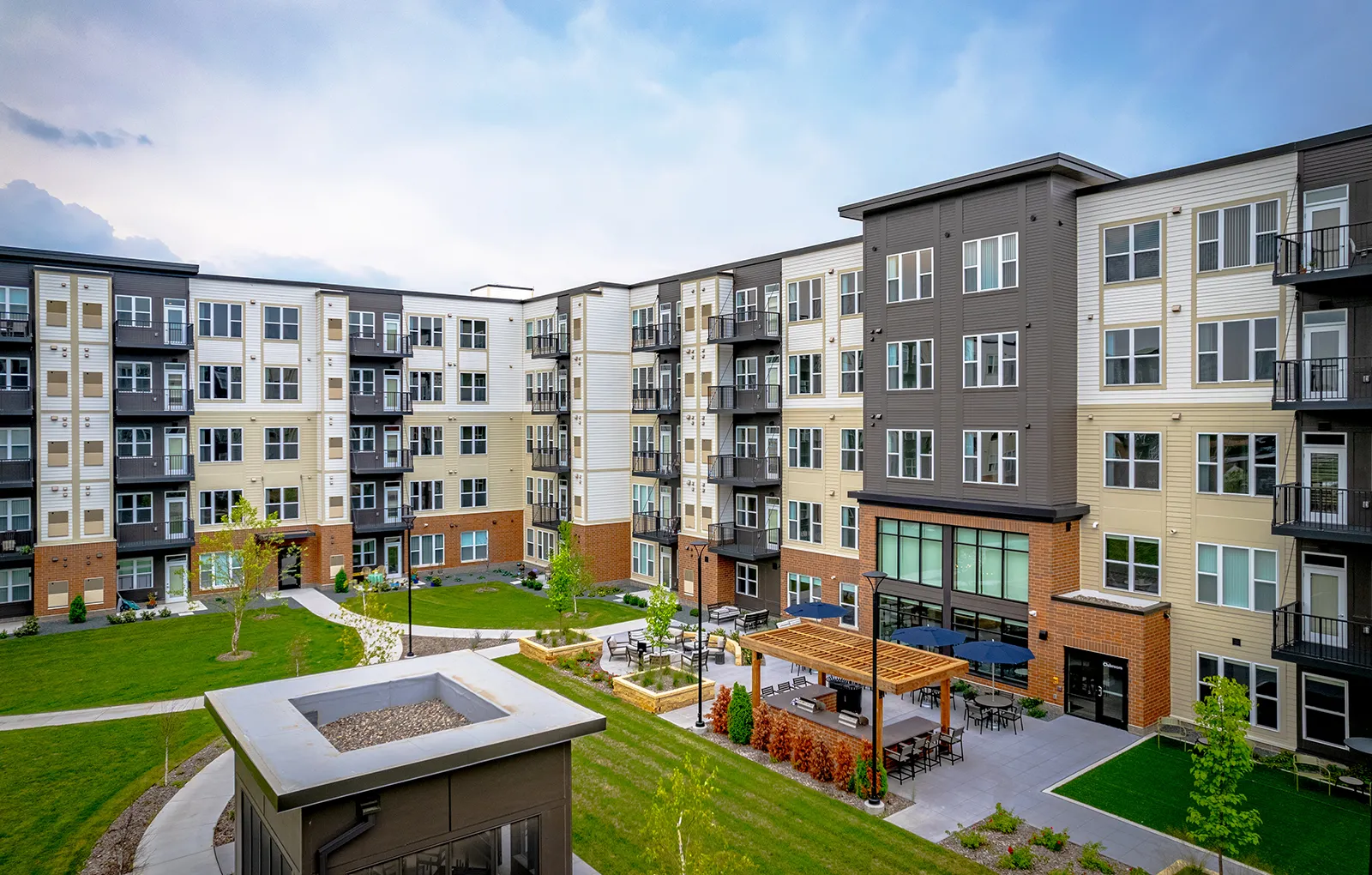 Understanding the Dutch Senior Housing Model
Unlike many other countries, the Netherlands emphasizes aging in place. Most senior apartments are designed to be part of the local community rather than isolated facilities.
Independent Senior Apartments (Seniorenwoningen)
These are independent rental units specifically designed for people aged 55 or 65 and older. They feature no-step entries, wider doorways for wheelchairs, and emergency call systems. These apartments allow residents to maintain full autonomy while being surrounded by peers in a quiet, accessible environment.
 Service Flats and Assisted Living
Service flats provide a middle ground between total independence and institutional care. Residents rent their own private apartments but have access to shared services such as meal delivery, cleaning, and social activities. In 2026, many of these facilities in cities like Utrecht and The Hague have integrated smart-home technology to monitor health and safety non-intrusively.
Residential Care Centers (Woonzorgcentra)
For those requiring more intensive daily assistance, residential care centers offer small-scale living arrangements. These are often organized as "living groups" where residents have private bedrooms but share a communal kitchen and living area, fostering a sense of family and reducing loneliness.
Regional Rental Trends and Costs
The cost of senior apartments in the Netherlands varies significantly depending on the province and the level of service included in the rental agreement.
The Randstad Area (Amsterdam, Rotterdam, The Hague)
As the most urbanized part of the country, the Randstad has the highest demand. A modern one-bedroom senior apartment in the private sector can range from €1,200 to €2,200 per month. While expensive, these locations offer the best access to specialized hospitals and international communities.
Northern and Eastern Provinces (Groningen, Overijssel)
For those seeking a more tranquil and affordable retirement, provinces like Groningen or Drenthe offer excellent value. Similar high-quality senior housing in these regions can be found for €800 to €1,300 per month, often with more green space and a slower pace of life.
Navigating the Dutch Rental System
The Dutch rental market is divided into "Social Housing" and the "Private Sector," which is a crucial distinction for retirees to understand.
Social Housing for Seniors
A significant portion of senior housing is managed by housing corporations (woningcorporaties). These units have capped rents but are subject to strict income limits and long waiting lists. Seniors often receive priority (Voorrang) on these lists, but it is still common to wait several years in popular cities.
The Private Rental Sector (Vrije Sector)
For those with higher incomes or those who cannot wait for social housing, the private sector offers more immediate availability. There are no income ceilings, but the rents are market-driven. In 2026, many new private "luxury senior resorts" have opened, offering high-end amenities like on-site spas and gourmet dining.
The "Anmeldung" and Legal Requirements
Regardless of the type of housing, all residents must register their address at the local municipality (Gemeente). For international seniors, this requires a valid residency permit or EU citizenship. A formal rental contract is mandatory and provides strong legal protection against arbitrary eviction or excessive rent hikes.
Financial Support and Care Subsidies
The Dutch government provides financial mechanisms to ensure that quality care remains accessible to the elderly.
- Huurtoeslag (Rent Subsidy): Low-income seniors living in independent apartments may qualify for a government subsidy to help cover part of their monthly rent.
- Wlz and Wmo Acts: Long-term care costs are largely covered by the Long-Term Care Act (Wlz) and the Social Support Act (Wmo). These acts ensure that even if a resident lives in a private apartment, they can receive subsidized home-care services (Thuiszorg) like nursing, help with dressing, or physical therapy.
Conclusion
Renting a senior apartment in the Netherlands in 2026 offers a high standard of living characterized by safety, accessibility, and social integration. Whether choosing a high-energy apartment in Rotterdam or a peaceful service flat in the Gelderland countryside, the focus remains on dignity and independence. By understanding the regional cost differences and the various levels of care available, seniors can secure a comfortable and future-proof home in one of the world’s most elderly-friendly nations.


